For the past year, Michael and I have been renting a house in the Shawangunk Mountains. There is a pond outside our house. Michael really wanted to make a film at our pond, which reminded him of the four lakes at Yaddo—the eponymous lakes in his piano piece "Four Lakes For Children." When he recorded this piece for his upcoming album, I suggested we make a music video for the first movement as an excuse to film around the pond.
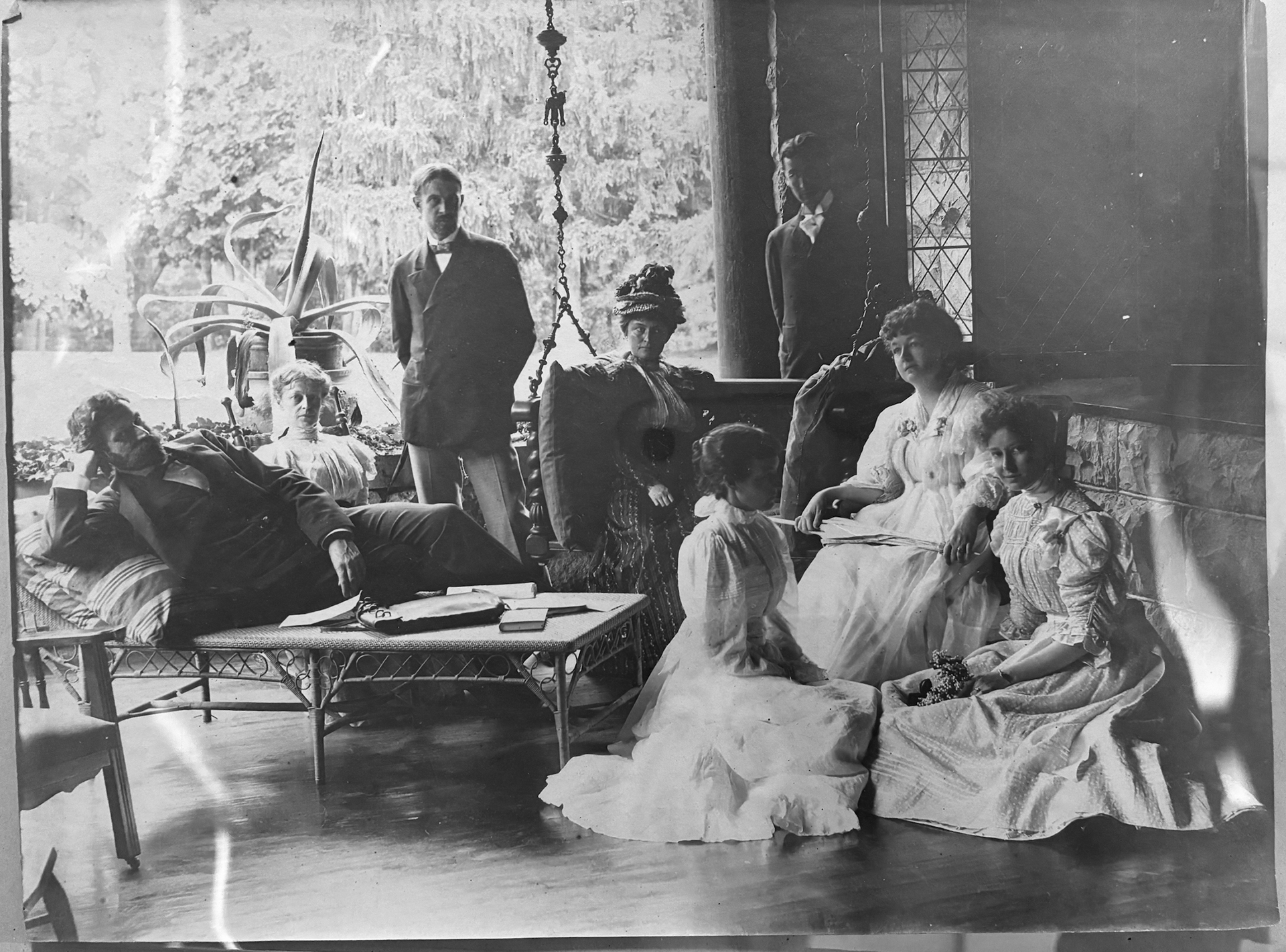
We came up with the idea of creating a fake silent movie featuring Yaddo's founders at home at their estate in the late 1800s. We thought it would be fun to dress up in Gilded Age period costume and play with early cinema techniques. We visited the Special Collections at the New York Public Library to look at original photos from the Yaddo archives as research and inspiration for our film.

Yaddo's founders & guests at Yaddo c. late 1800s. Yaddo Archives, Box 411. Special Collections, New York Public Library.
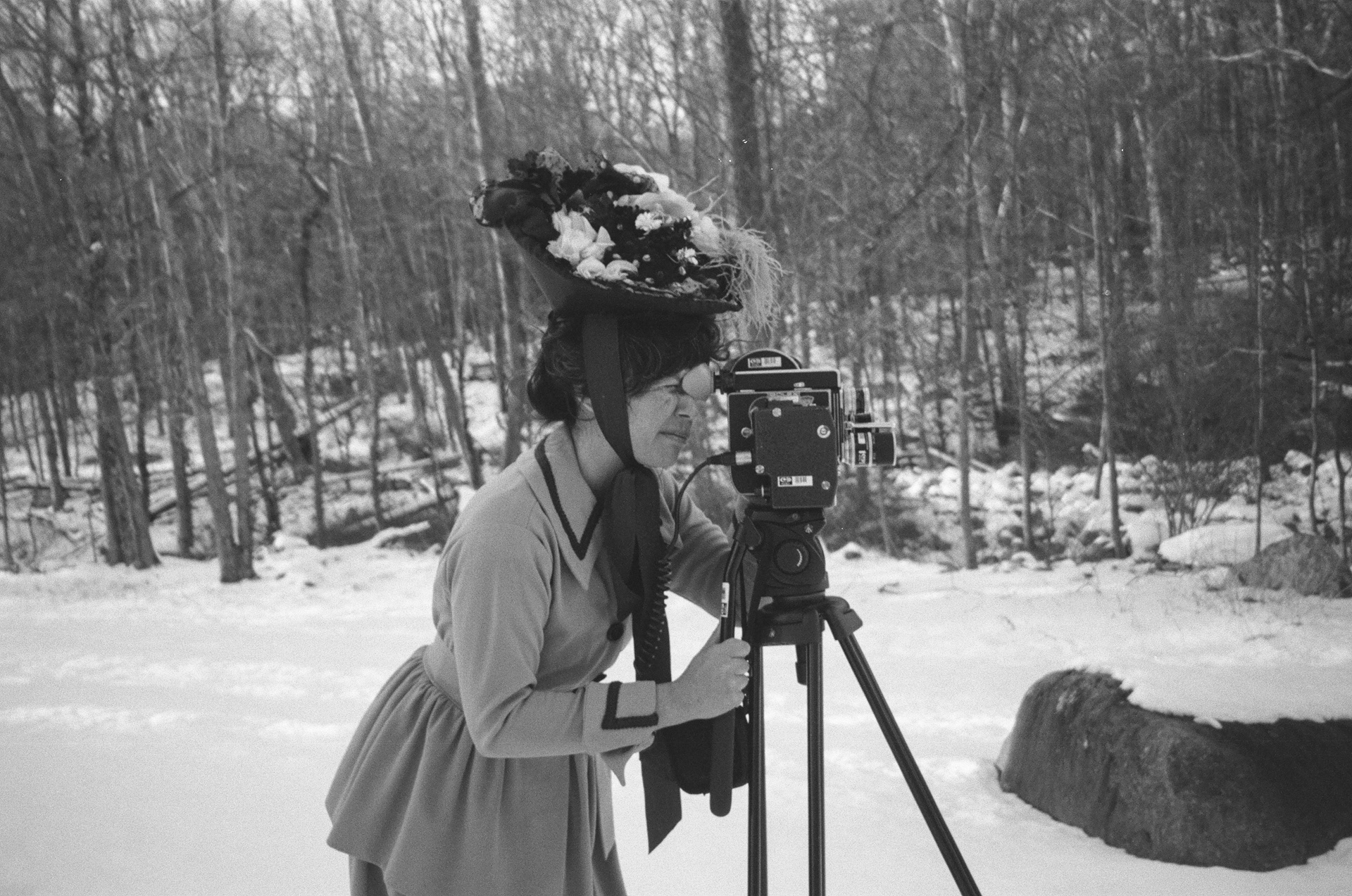
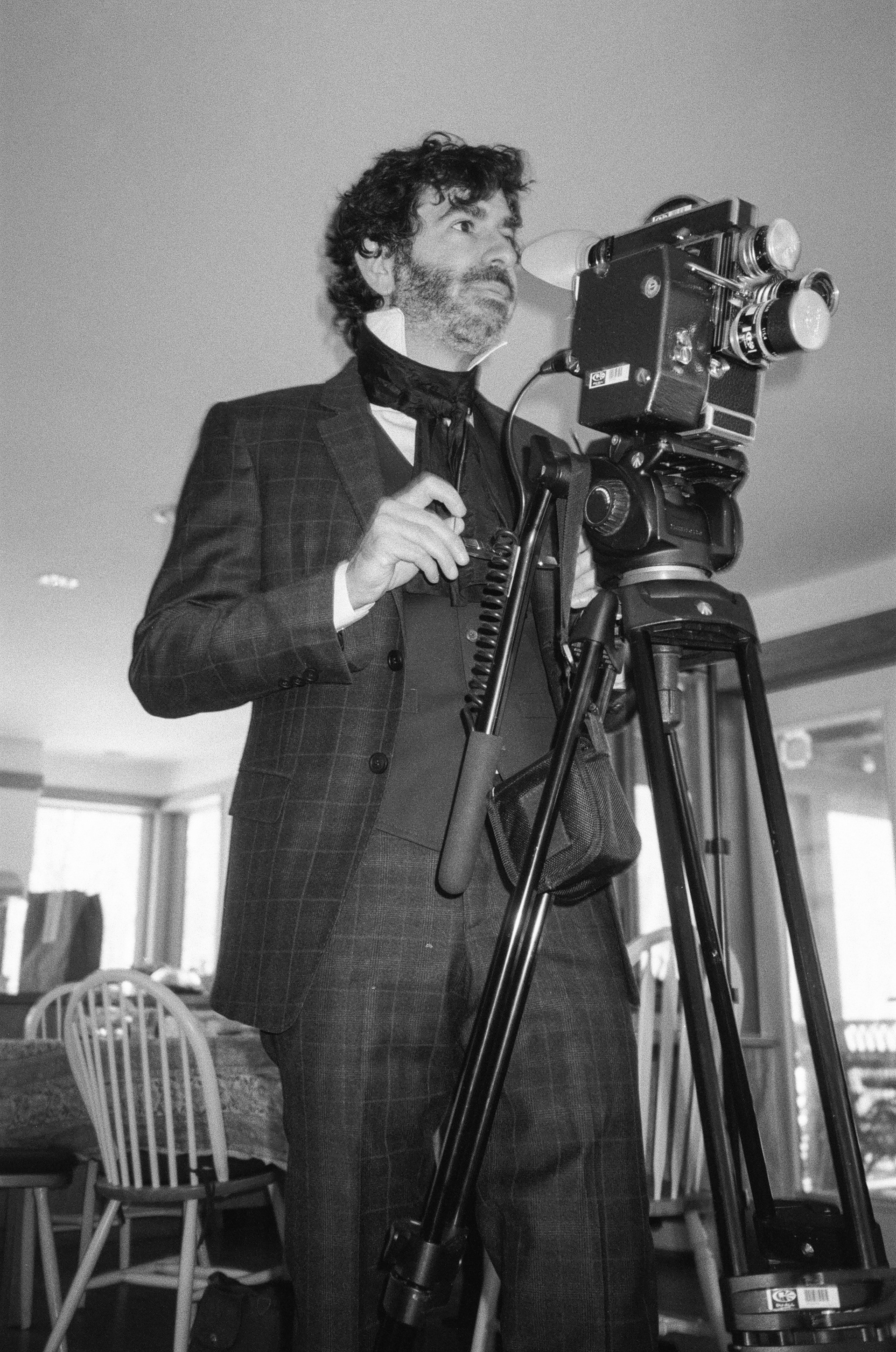
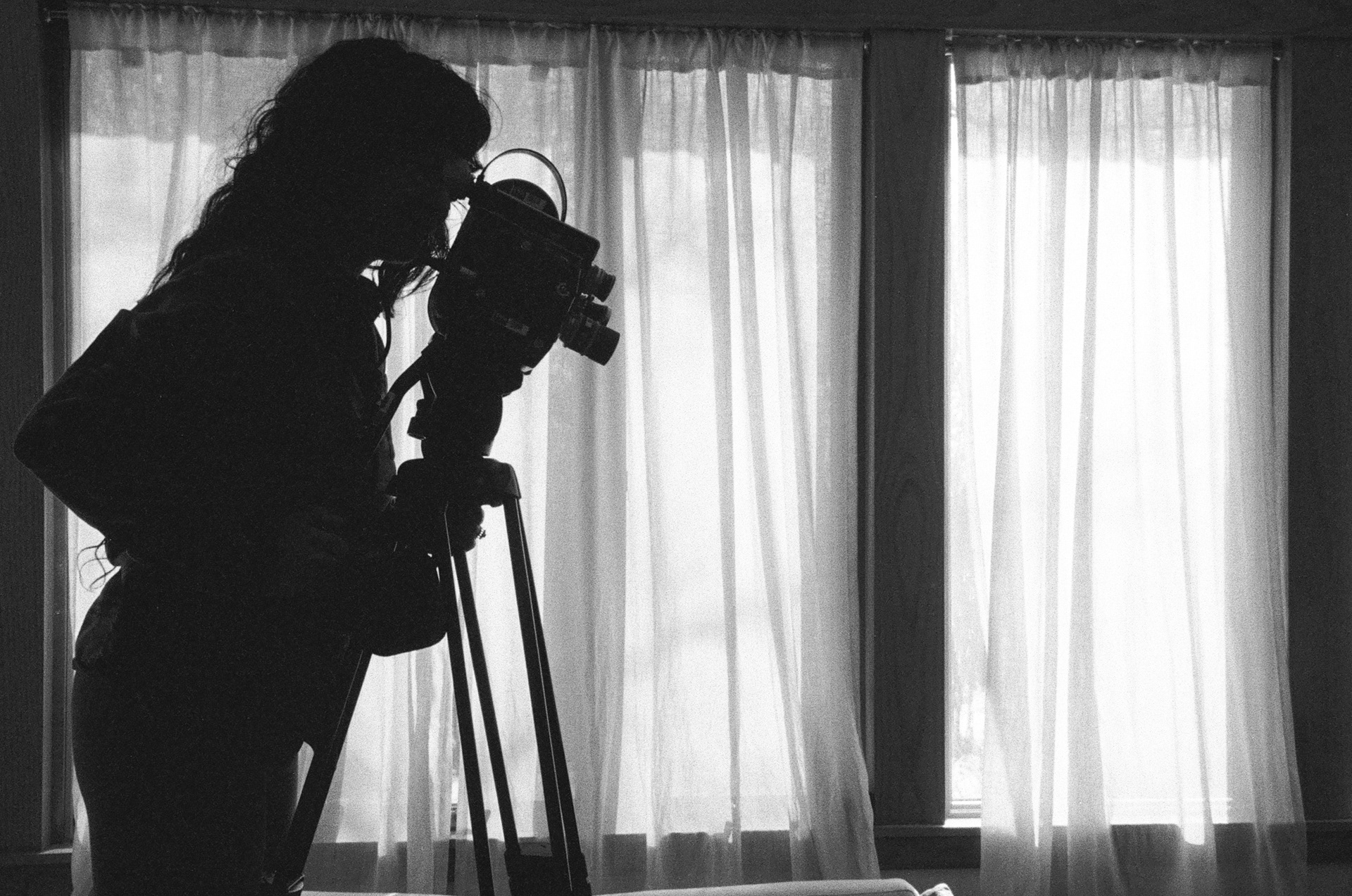
We looked into renting a cinematograph (early motion picture camera), but this was prohibitively expensive and impractical. We ended up shooting on a Bolex, on 16mm Kodak Double-X shot at 18fps and scanned at 24fps to mimic that slightly sped-up silent movie look. Although it would have been more authentic to hand-crank the camera, I decided to use a motor for more control—and anyway, they didn't even have motion picture cameras in 1878, so a silent film from that time period wouldn't be historically accurate. The closest thing would have been chronophotography. But we liked the idea of making a movie, even if it didn't exist yet.

Behind the camera and in costume, on set for Lake Alan. Dec 6, 2025. Photo by Michael Stephen Brown.
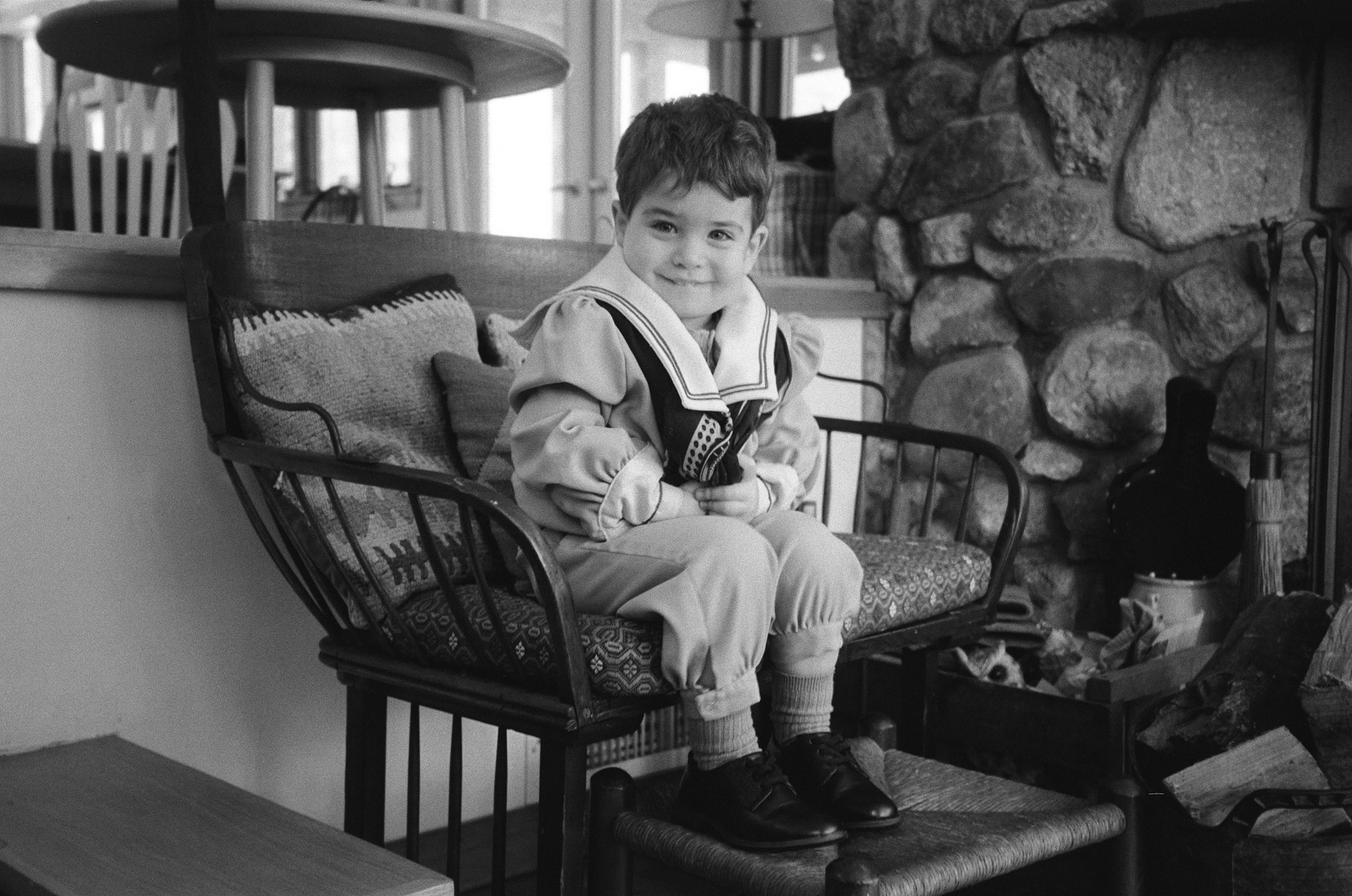
Knowing that we'd be shooting on black-and-white film stock (and seeing how dull and gray the landscape was in the weeks leading up to our shoot), I prayed for snow to help us achieve a more dramatic, high contrast outdoor look. Lo and behold: the first snow of the season arrived, just in time! But operating a Bolex in winter weather while wearing full 19th century period costume was challenging, and even more so when directing a 2-year-old child.

Samson Weiss waiting between takes, on set for Lake Alan. Dec 6, 2025. Photo by Shirley Gherson.
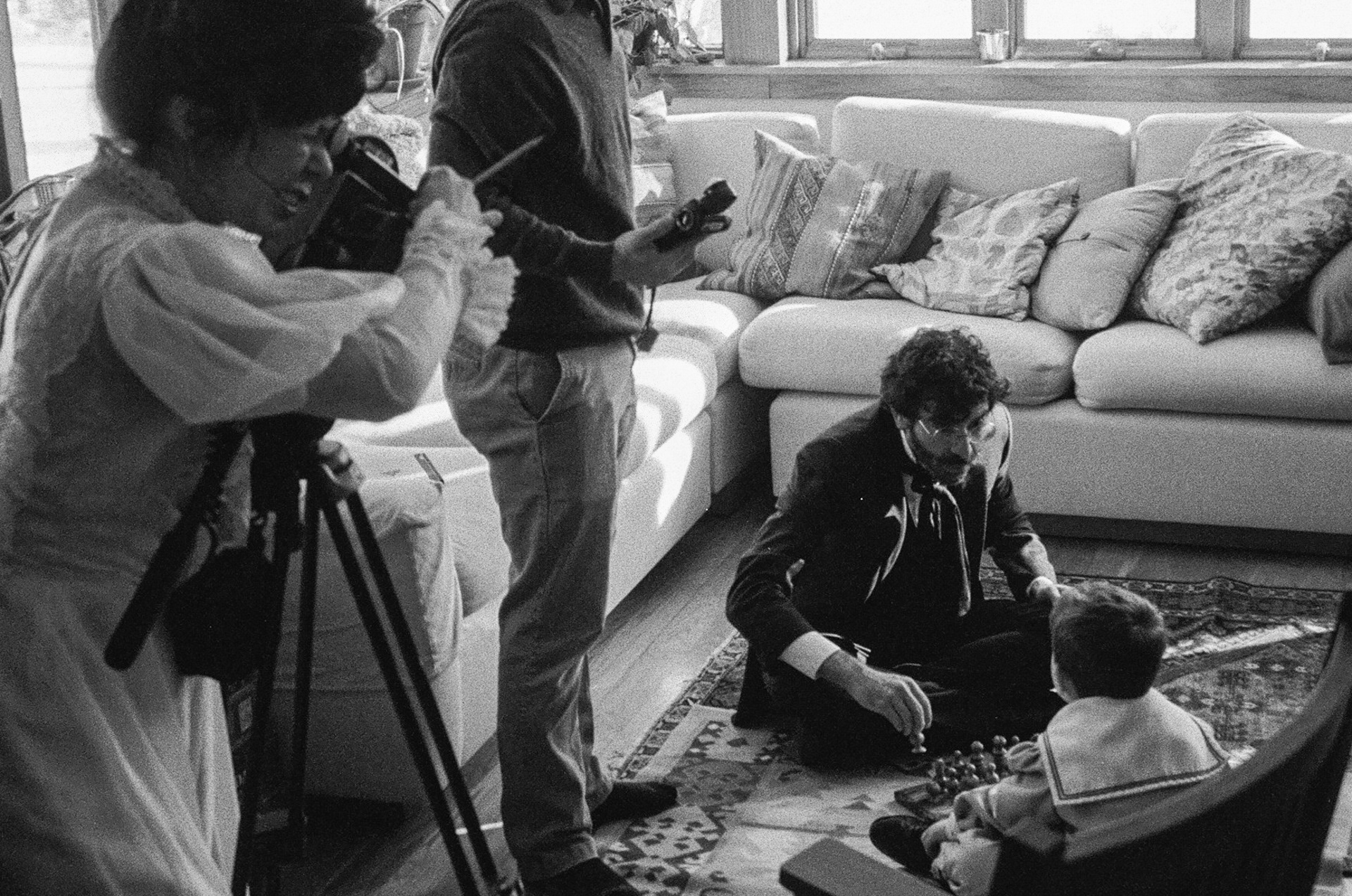
It's been a long time since I made a movie alone, without a professional crew. It was just me, Michael, and Samson's parents (our non-filmmaker friends), who were mainly responsible for taking care of Samson, but who also helped me light meter, keep time, and control the motor when I was in frame. On one hand, it was inefficient and frustrating to have to do the work of at least six people all by myself. On the other hand, it was refreshing to make a film quickly, cheaply, and for fun—without all the hoops I usually have to jump through just to get a project financed. It feels like I spend most of my time writing grants and looking for money instead of actually making films. Ultimately, the speed of the conception-to-completion process—and the satisfaction of loading, shooting, and editing four reels of 16mm film myself—outweighed the drawbacks of working without a crew, at least on a project of this scale.
So it was nice to be able to practice my craft, without the expectations and external pressures that come with a professional film shoot, without the many strings attached. To practice cinema not as an industry, but as an art.

Finding focus while Michael plays with Samson, on set for Lake Alan. Dec 6, 2025. Photo by Shirley Gherson.
One thing I am thinking about as I write this is my time working with Poh Lin Lee. Poh is a writer, teacher, researcher, and narrative therapist who works with filmmakers to help us better understand our practice, our relationships, our bodies, and ourselves. I worked with her on and off for several months in 2022 and 2023, in two different group settings with other filmmakers, as well as individually. These encounters with Poh mark a turning point in my creative practice.
It was Poh who helped raise my awareness of my own needs and preferences as an artist and a woman, and of the invisible social pressures influencing my thoughts and actions—or more often, my inaction. I first met Poh in the aftermath of an international film festival that imploded spectacularly on itself. I'll spare you the details, but I was so shocked and traumatized by this event, I could not respond in any way other than mute helplessness.
Working with Poh helped me reclaim a sense of agency that I had lost along the way to becoming a professional filmmaker: a role which requires infinite patience, politeness, and political correctness. It wasn't until I began working with Poh that I realized that I had sacrificed so much of myself to the demands of working in an industrial filmmaking system: a brutal, ruthlessly competitive system that rewards artists who are willing to do or say anything to gain status and visibility, even if that means exploiting or disrespecting others, our environment, or ourselves in the process.
Poh taught me that I do not have to tolerate this. That I have the power to reimagine the conditions under which I practice my craft. And that the process of creating a work of art is as personal and sacred as the process of creating life itself. 
In thinking about the relationship between art and life—and in working with Poh, who has such a kind, loving, maternal presence—I began to feel an unexpected, long-repressed desire for motherhood. I was both delighted by and ashamed of this feeling. Motherhood was something I had learned to fear and reject as antithetical to my identity as a feminist artist who valued her autonomy and independence. For as long as I can remember, I had always believed I never wanted children. That a child would be an obstacle or a burden, rather than a blessing or a gift.

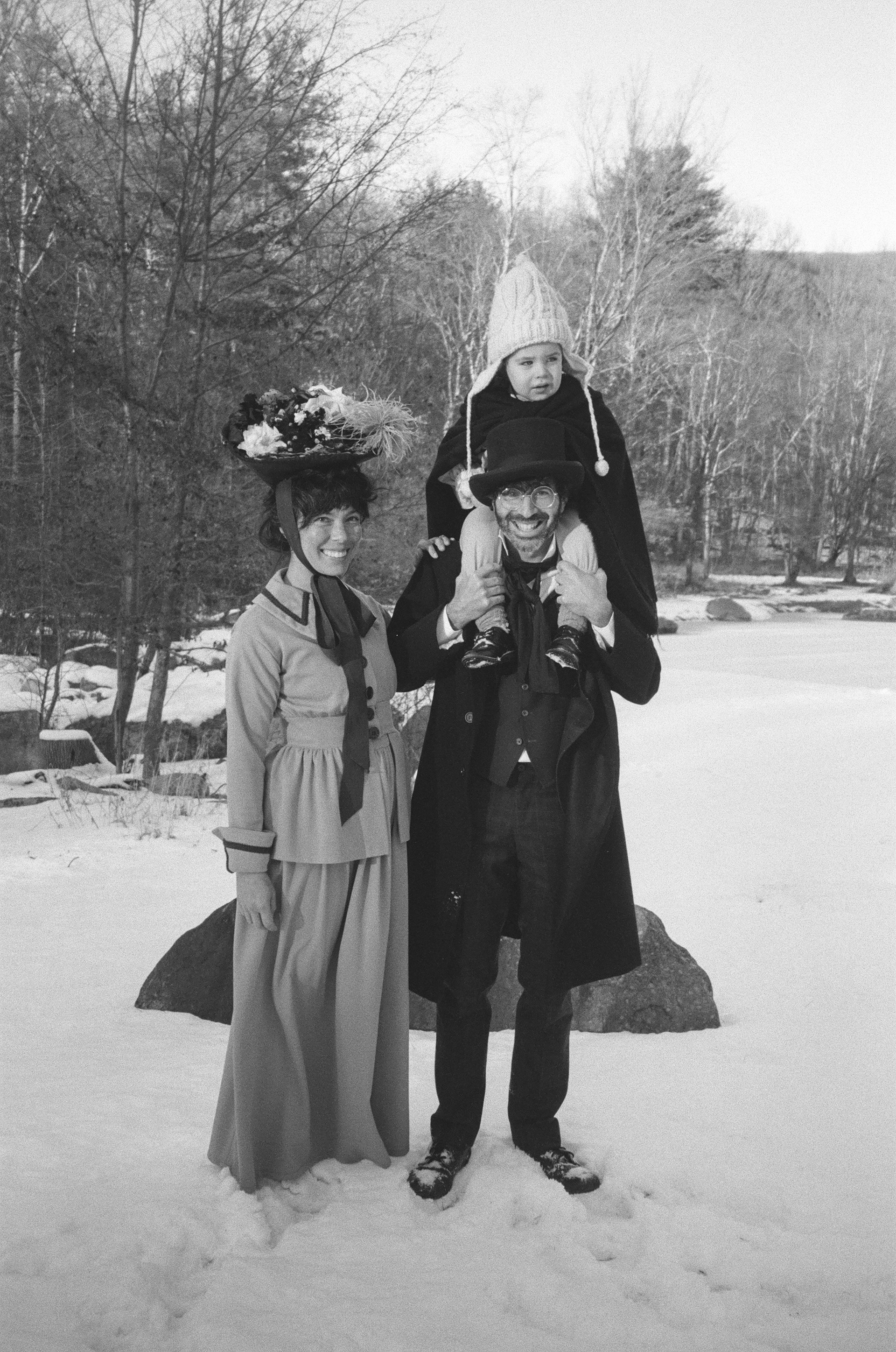
Me, Michael, and Samson on set for Lake Alan. Dec 6, 2025. Photo by Shirley Gherson.
The story of Yaddo's founding is a tragic one. A story that fascinated both me and Michael when we arrived as artists-in-residence in 2024. 
Upon arrival, each new artist is immediately given a tour of Yaddo's idyllic grounds and facilities, ending with the return to one's cabin or room. If you're lucky, your tour will be given by the enchanting poet Michael Snediker, who will captivate you with his detailed knowledge of the secret histories of Yaddo's architecture, artworks, and artifacts. At this moment, disoriented and awestruck, the first-time Yaddo artist might begin to examine the contents of their room. After inspecting the bedroom, the bathroom—and if you have one, the piano—you might notice the literature left upon your desk. This includes two books on the history of Yaddo, and a photocopy of an original manuscript from the year 1900.
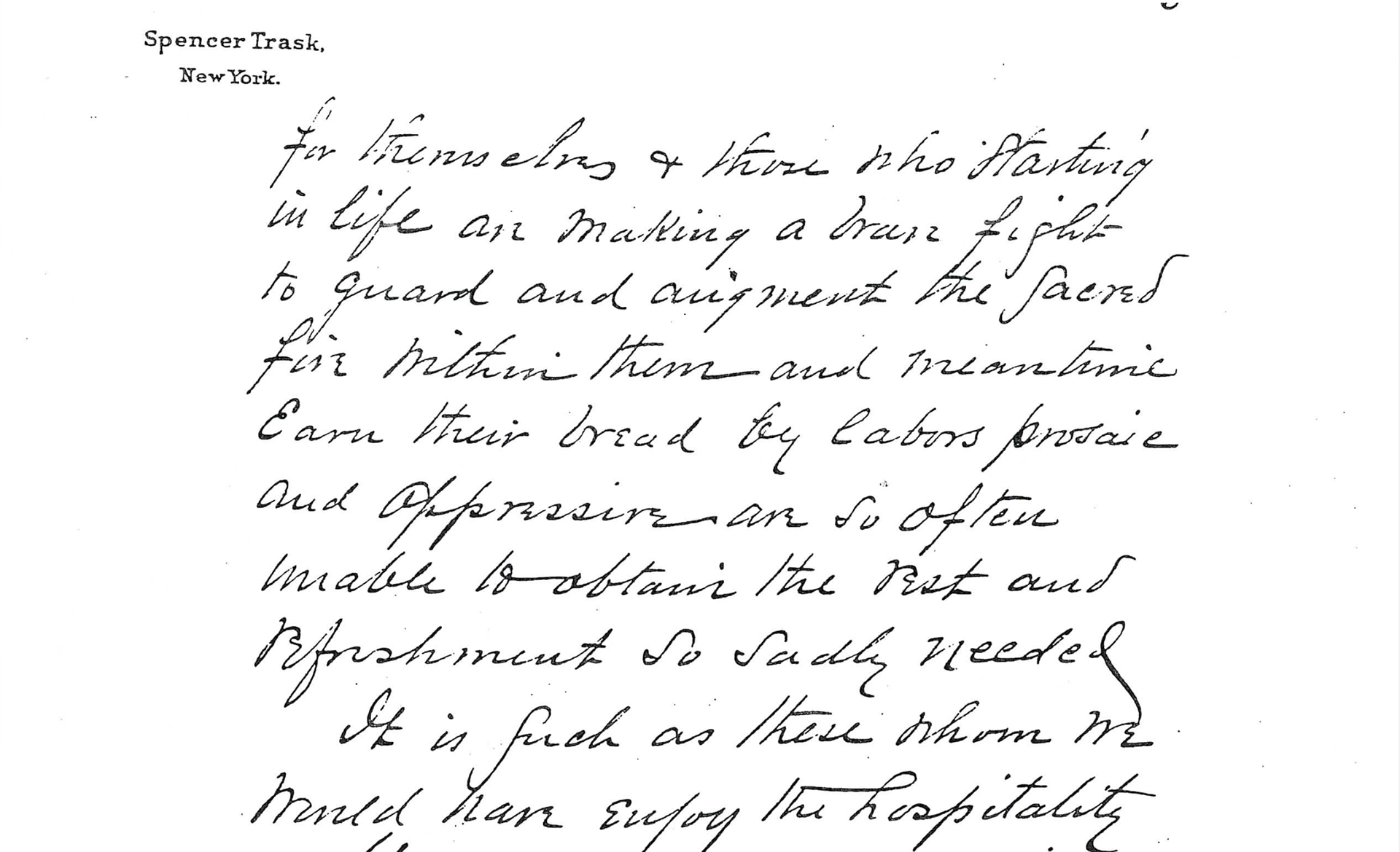
This manuscript, handwritten in a cryptic cursive, establishes the Trust of "The Corporation of Yaddo." It is a legal document describing how this magnificent 400-acre woodland estate would be dedicated exclusively to the nurturing of artists and the creation of art—at no cost to artists—in perpetuity.
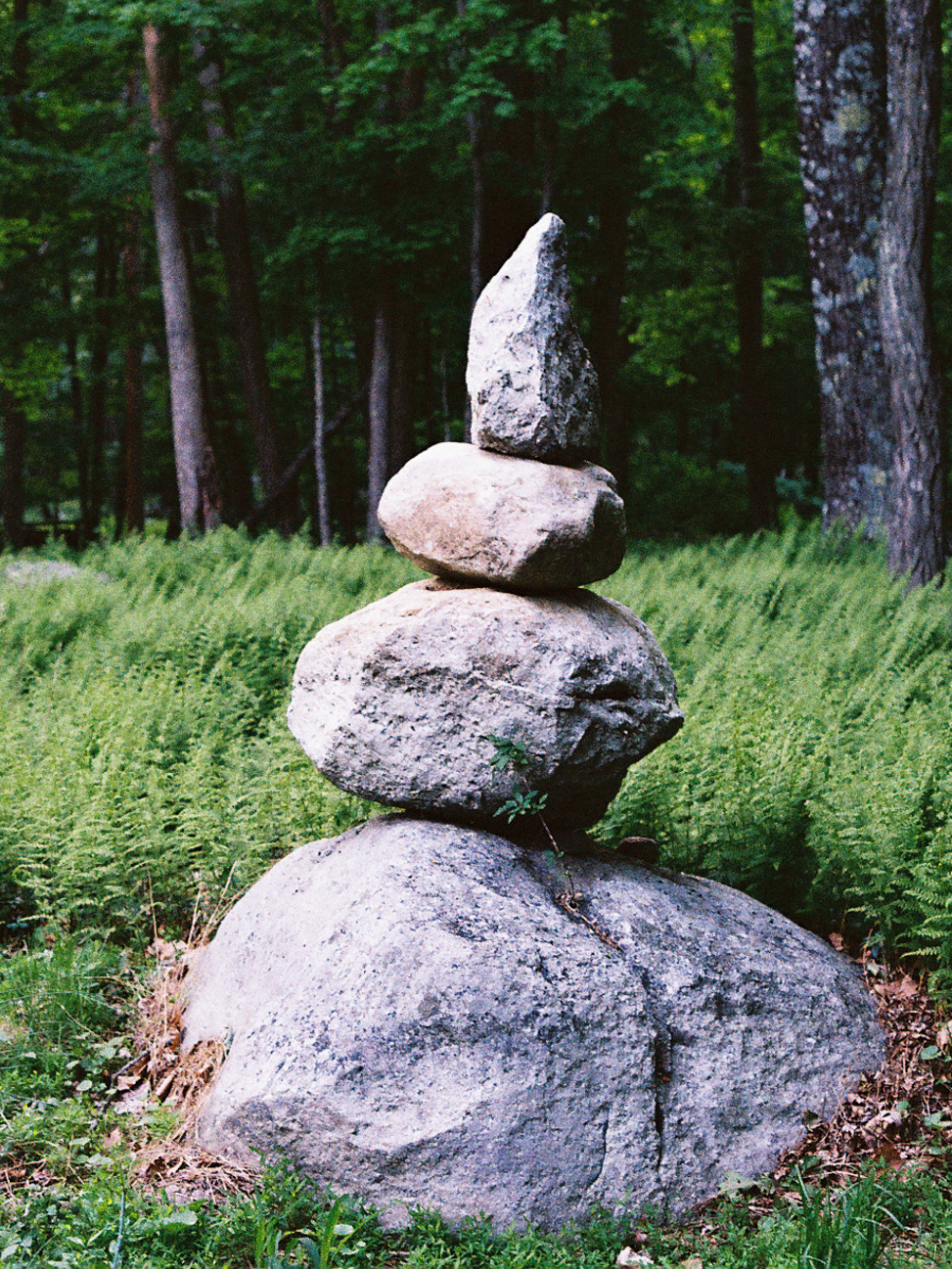
This beautiful gift was a result of the untimely death of all four children of Spencer and Katrina Trask. It was their answer to the question of who to leave their estate to now that there would be no heirs. Each of their children died suddenly, before the age of 10. The four lakes at Yaddo are named after these four children. After purchasing the land in 1881, the Trasks had befriended and regularly hosted writers and artists at their estate. Rather than bequeath this land to other affluent relatives or friends, they wished instead to give it to artists, to become a sanctuary for art. Forever!

Excerpt of the original manuscript by Spencer & Katrina Trask. Feb 1900. Image: Courtesy of Yaddo.
"we desire to found here a permanent Home to which shall come from time to time for Rest & Refreshment Authors, Painters, Sculptors, Musicians and other artists both men and women, few in number and chosen for Creative Gifts & besides and not less for the power & the will & the purpose to make these gifts useful to the world. 
Those who in working for their art have not laid up material possessions for themselves & those who starting in life are making a brave fight to guard and augment the Sacred Fire within them and meantime earn their bread by labors prosaic and oppressive are so often unable to obtain the rest and refreshment so sadly needed.
It is such as these whom we would have enjoy the hospitality of Yaddo their sole qualification being that they have done, are doing or give promise of doing good & earnest work." (1)

Michael behind the camera, on set for Lake Alan. Dec 6, 2025. Photo by Shirley Gherson.
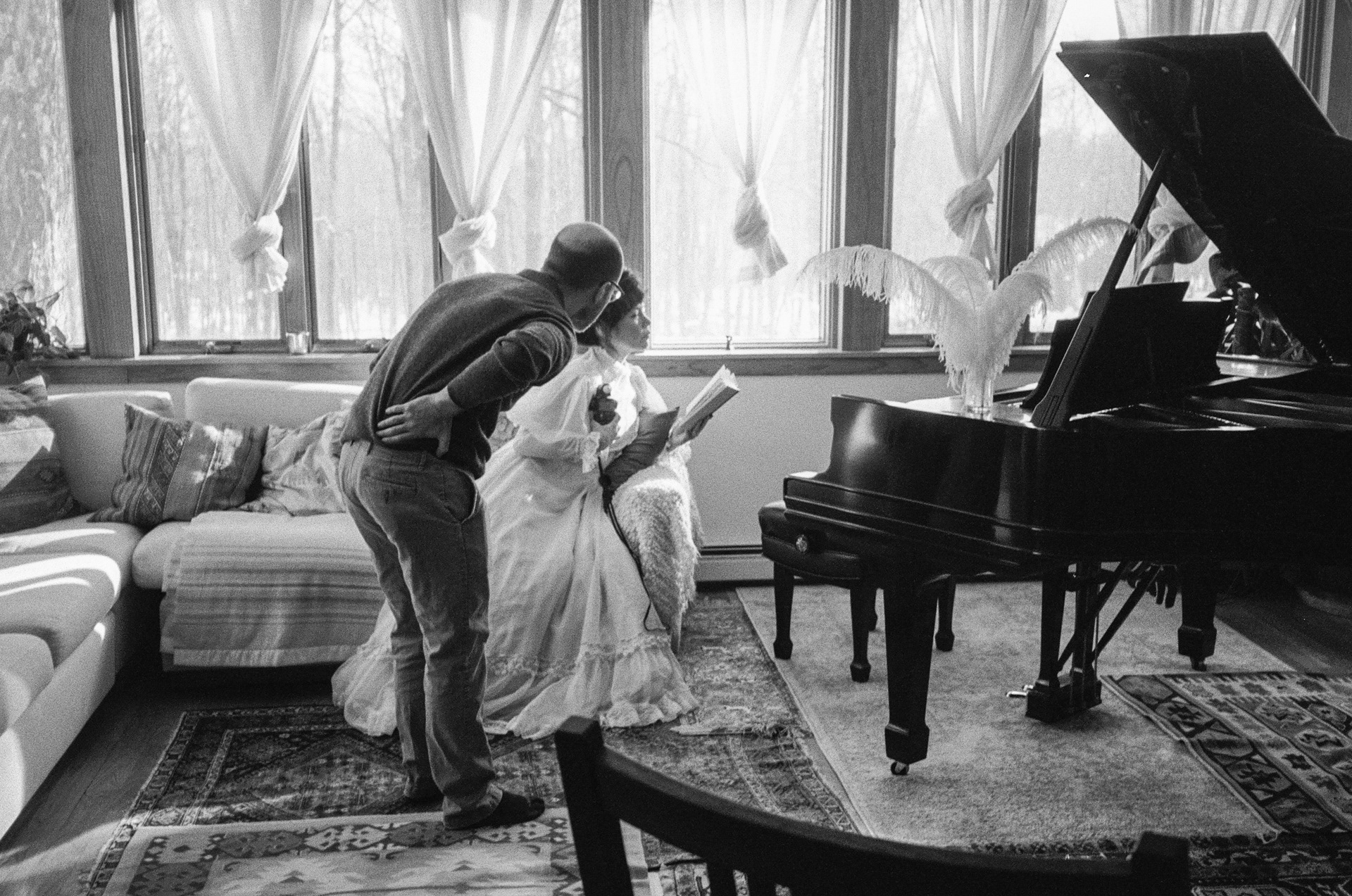
Orion Weiss reads the light meter on set for Lake Alan. Dec 6, 2025. Photo by Shirley Gherson.
Although we come from two very different worlds (classical music vs. cinema), Michael and I quickly bonded over the fact that we had both spent our first nights at Yaddo deciphering this document in its entirety—along with all the other literature left in our cabins chronicling Yaddo's long and dramatic history. I wept when I read the manuscript. I was happy to find someone else who'd made an effort to read it too. Apparently none of the other artists in our cohort were interested in this history, and had barely glanced at the document and the books. But Michael and I were mesmerized with the legends and lore. With the magic of the place.
It wasn't immediately apparent to me what that meant yet, but our shared curiosity in the story of Yaddo was the start of something much deeper between us than mere interest in archival records.
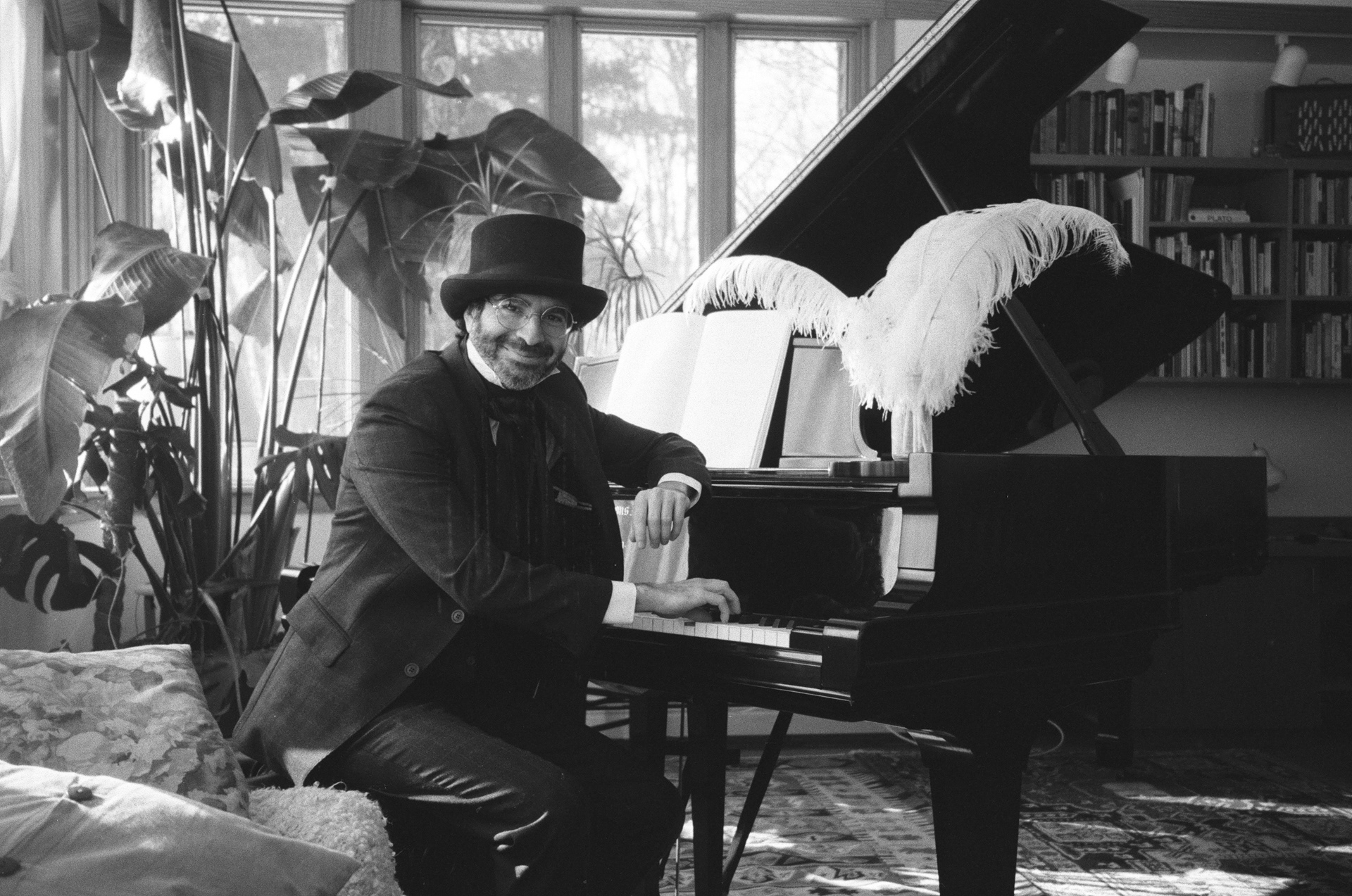
Since then, Michael the composer-pianist (and optimist-romantic) has somehow managed to revive and nurture a part of me I thought I had lost. The part of me that values taking time and care, to go all in, to trust my instinct, to play, and to dive deep, as deep as I want to. No matter how irrelevant or obsessive or unpopular it may seem to others. This is a part of me that almost died working in a culture that values quantity over quality. Followers over friendship. Politics over poetry. Etc. Etc.
I have been profoundly lonely in my journey as an artist. Yaddo brought me back to my senses, and to Michael.  And Michael brought me back to life.

Michael at the piano, on set for Lake Alan. Dec 7, 2025. Photo by me.

When I was researching early cinema aesthetics for Lake Alan, I came across the 1896 film La Fée aux Choux (The Cabbage Fairy), written and directed by Alice Guy-Blaché. It's a bizarre and hilarious one-minute film in which a woman dressed in floral gown prances around the screen pulling live babies out of giant cabbages! Historians consider this the first fictional film, as well as the first film directed by a woman.

La Fée aux Choux, Directed by Alice Guy-Blaché, 1900. Gaumont Film Company.
There are three different versions of this film, shot in 1896, 1900, and 1902. The 1896 version is now lost, but the the 1900 and 1902 versions survive. The 1900 version is the one I've embedded above, and the one I find most compelling.
Although Lake Alan is designed to resemble an actuality film (early cinema documentary) rather than a fictional fantasy, I still find it interesting to consider what on earth was going through this woman's head when she decided to make this film?*
Maybe 100 years from now, another filmmaker will stumble across Lake Alan and ask themselves the same question. Maybe, in the future, a child in a wheelbarrow will look as silly and absurd as a baby in a cabbage patch does to me today. Maybe pianos won't exist anymore. Maybe snow won't exist. But surely music and art and artists will exist?

*A little digging reveals that it was conceived as a picture postcard brought to life, intended to promote the Gaumont company's newfangled 58mm biographe cinema camera. The film was such a success, Gaumont asked Guy-Blaché to remake it twice in order to strike new prints. (2)

Me behind the camera, on set for Lake Alan. Dec 7, 2025. Photo by Michael Stephen Brown.
Lake Alan is our love letter to Yaddo. And to ourselves!
Alan Trask and his siblings are now long gone. But if 100 years of artists are the heirs to the estate, then—in a way—we could all be considered the children of Yaddo. 
The complete, unabridged story of the making of Lake Alan is even deeper than I've divulged so far. But that is a story for another time.
— January 9, 2026
Sources: 
(1) Trask, Spencer & Katrina. (1900). Transcript of “Yaddo Founding Document.” Yaddo Archives and Special Collections. Yaddo, Saratoga Springs, NY.
(2) Olszynko-Gryn, Jesse & Ellis, Patrick. (2017). 'A machine for recreating life': An introduction to reproduction on film. The British Journal for the History of Science. 50. 383-409. 10.1017/S0007087417000632. 

Browse More

Back to Top