I deleted Instagram during the pandemic. It was one of the best decisions of my life. As a millenial who came of age in the 2000s, I was one of the earliest adopters of digital technology and social media. I got my first digital camera in 2003, joined "The Facebook" in 2004, followed by YouTube in 2005, MySpace in 2006, Vimeo in 2008, Twitter in 2009, and Tumblr in 2012. By the time I joined Instagram in 2013, I had already been regularly sharing digital photos and videos of my personal life with strangers on the internet for 10 years.
I was also one of the first of my friends to delete social media. To return to life in The Real World.

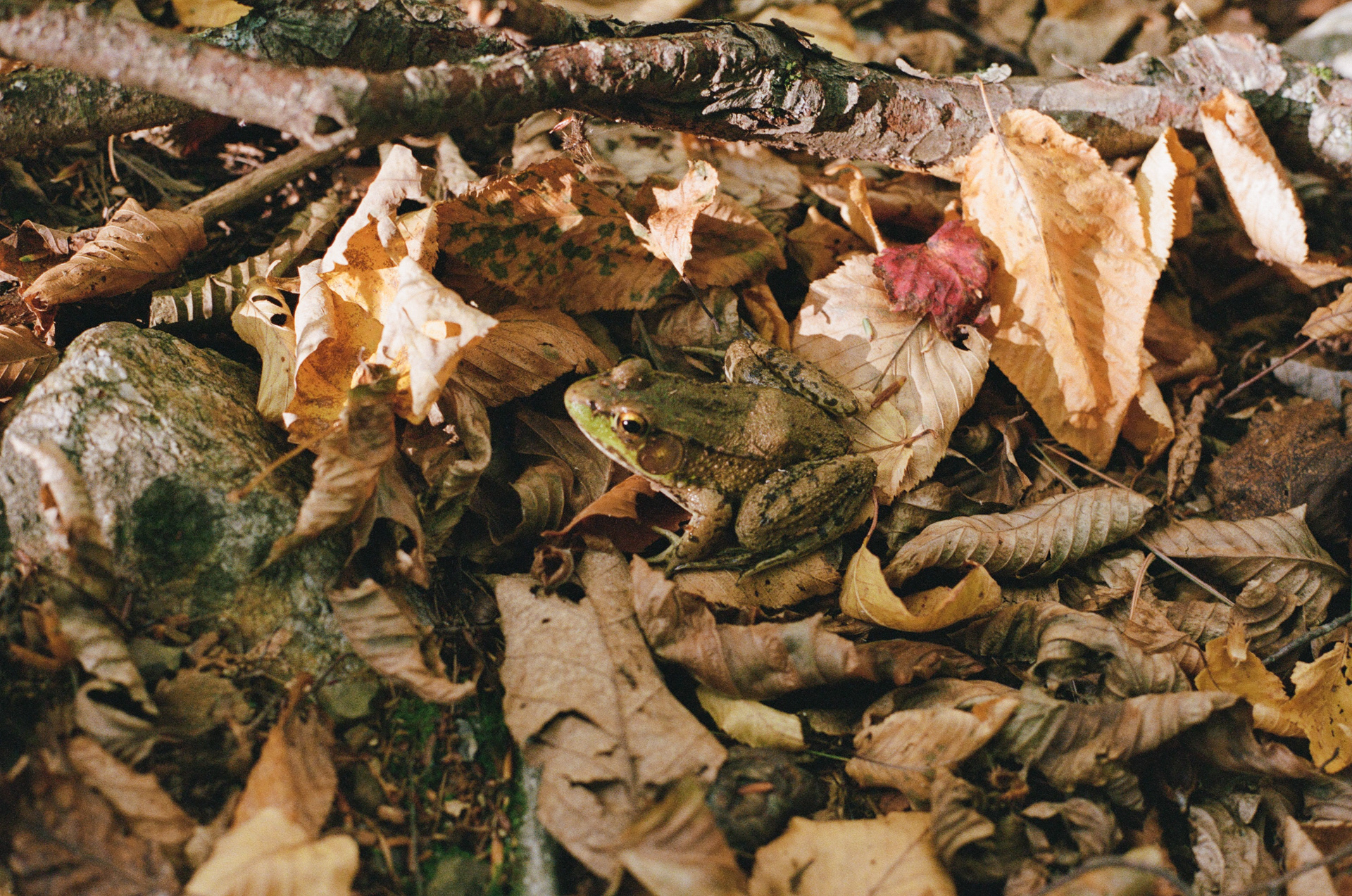
A common frog on the forest floor near the Palmaghatt Kill. Fall 2025. Photo by me.
In December 2024, after over a decade of living in New York City (preceded by a young adulthood and childhood of urban and suburban living), I finally moved out of the city and into the woods. I moved 90 minutes north of New York with the love of my life—a brilliant man and gifted artist who has traveled the world for his career, but had never gone camping, never made a fire, and had no idea what to do if he saw a bear. But Michael is nothing if not extremely capable, and so it was that we would spend the next 13 months together learning how to live among the birds, bees, and bears of the Shawangunk Mountains, AKA "The Gunks."
Coincidentally, during this time, I also started taking photos almost exclusively on 35mm film.

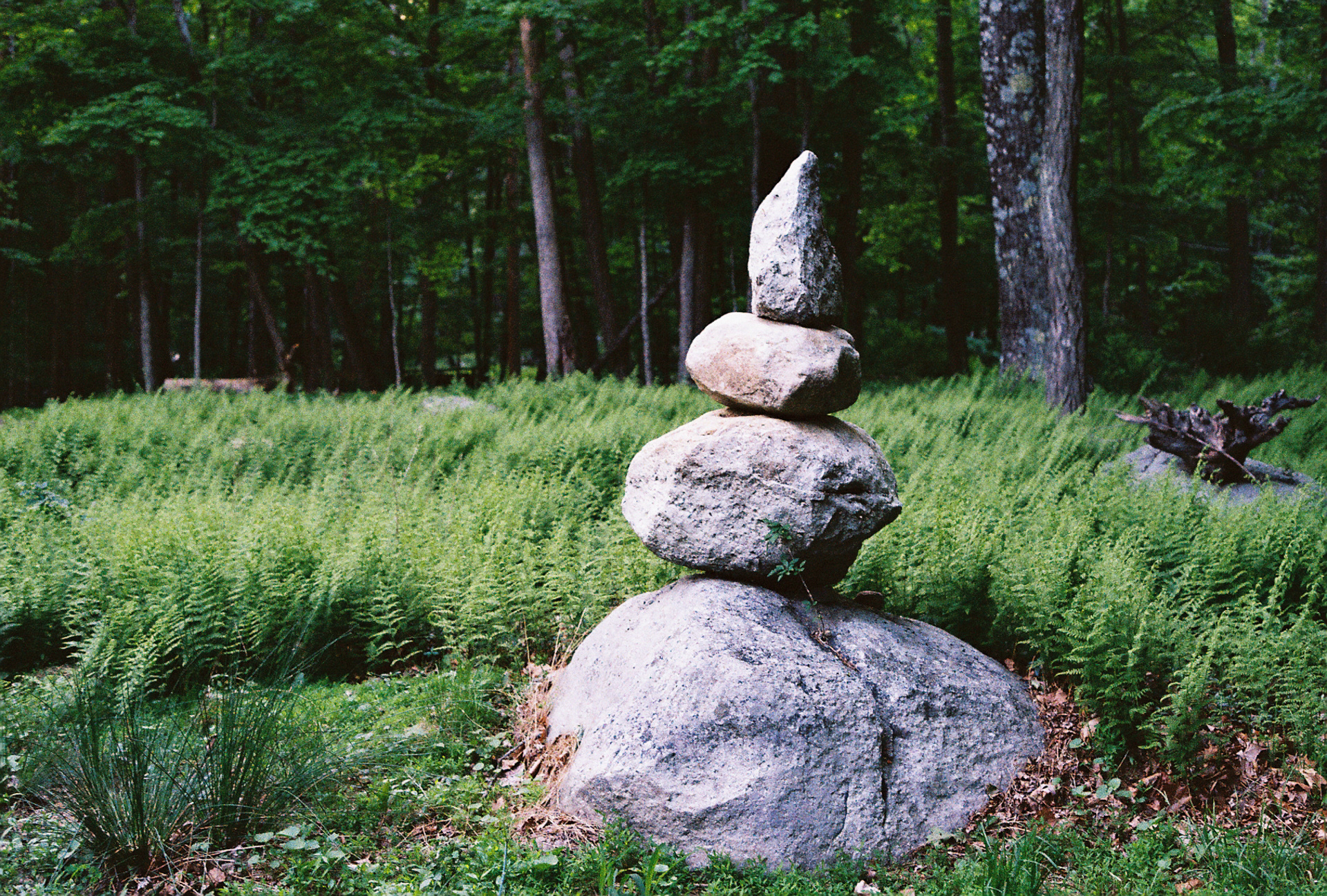
A massive cairn marks the road up the mountain behind our house. Awosting, NY. Spring 2025. Photo by me.
The very first photos I ever shot, as a child, were on film. My mom gave me a cheap automatic point-and-shoot that I would sometimes take to school, backstage at theatre productions, or on rare field trips to faraway places like Camp Manito-Wish, a 325 acre wilderness preserve in the uppermost reaches of northern Wisconsin. I went to a small K-12 school that had an annual tradition of taking the entire high school (students and teachers! ) on a weeklong backpacking trip before the start of every school year. These trips were my only exposure to nature. I had an otherwise extremely sheltered childhood which was spent mostly indoors. 
I think picture-taking was a way of proving to myself that I had gone places and done things that were outside the strict confines of my mother's house. I learned from a young age to feel nostalgia through my own photos; to associate them with longing for another time and place. They were not inert, perfunctory records of past events. Photos were portals that could transport me into my own vivid memories, where I could escape into my imagination and enter into a world of my own making. Where I could relive the ecstasy of climbing rocks, singing songs, or laughing with friends. I would obsessively leaf through and gaze at the glossy 4x6-inch prints over and over again, to remind myself what it felt like to feel happy and loved and free.

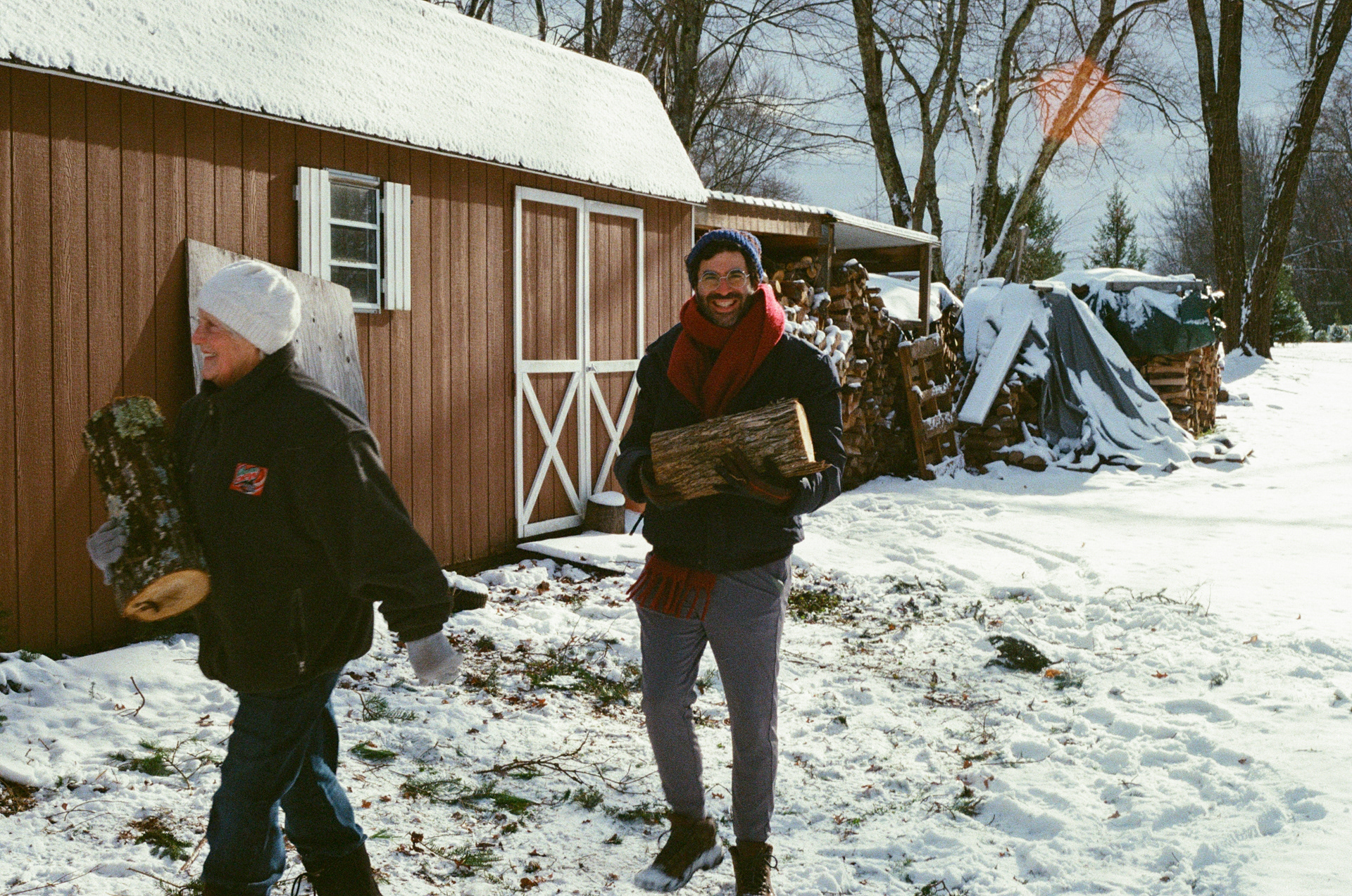
Michael at West Wind Tree Farm. Wallkill, NY. Winter 2024. Photo by me.
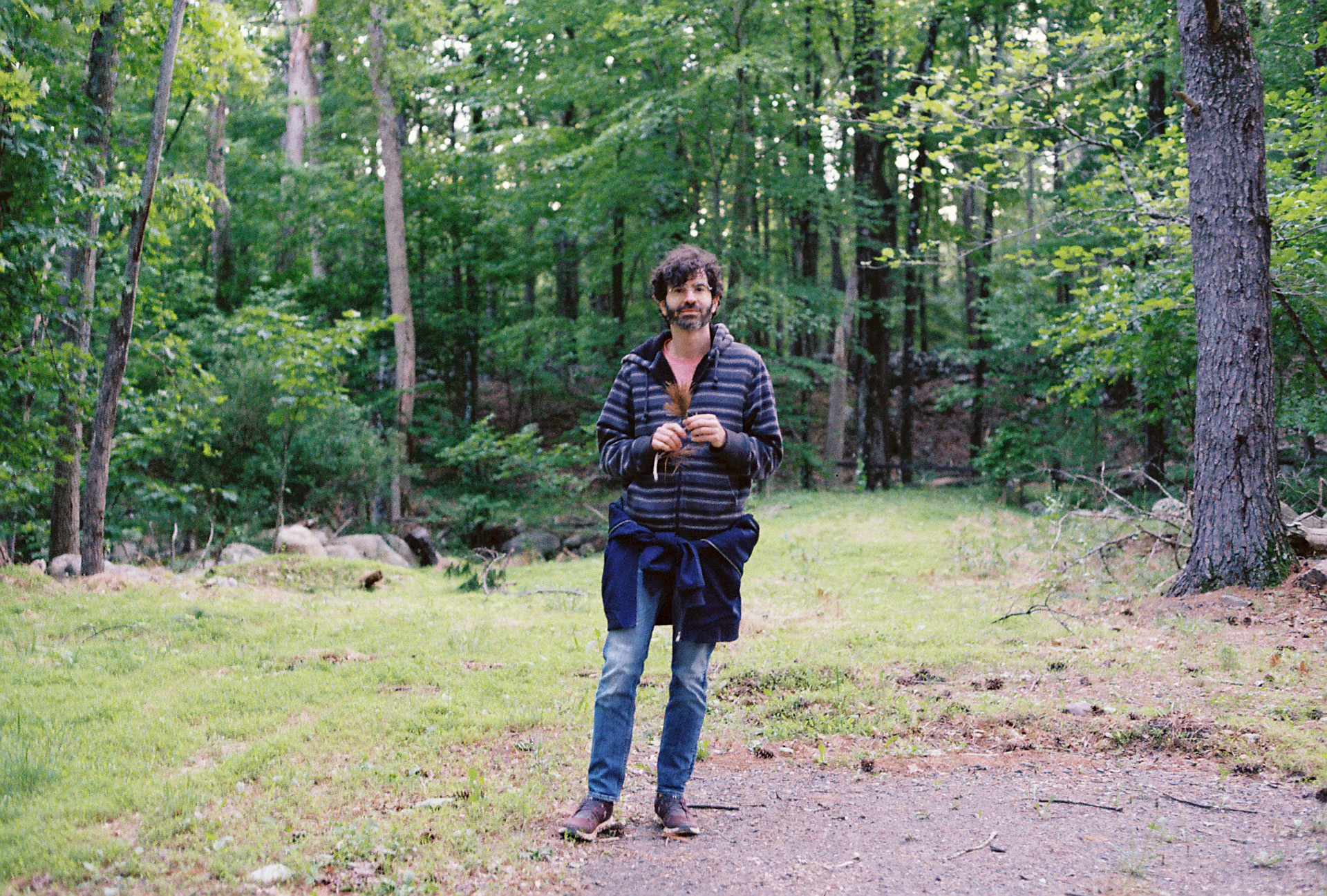
Michael on a walk near our house. Awosting, NY. Spring 2025. Photo by me.
It's been interesting to observe how my everyday relationship to images has changed since I traded my smartphone for a film camera. Since I met Michael. Since I moved to the wilderness. How my perspective has changed. What attracts my attention. What I deem "photo-worthy." 
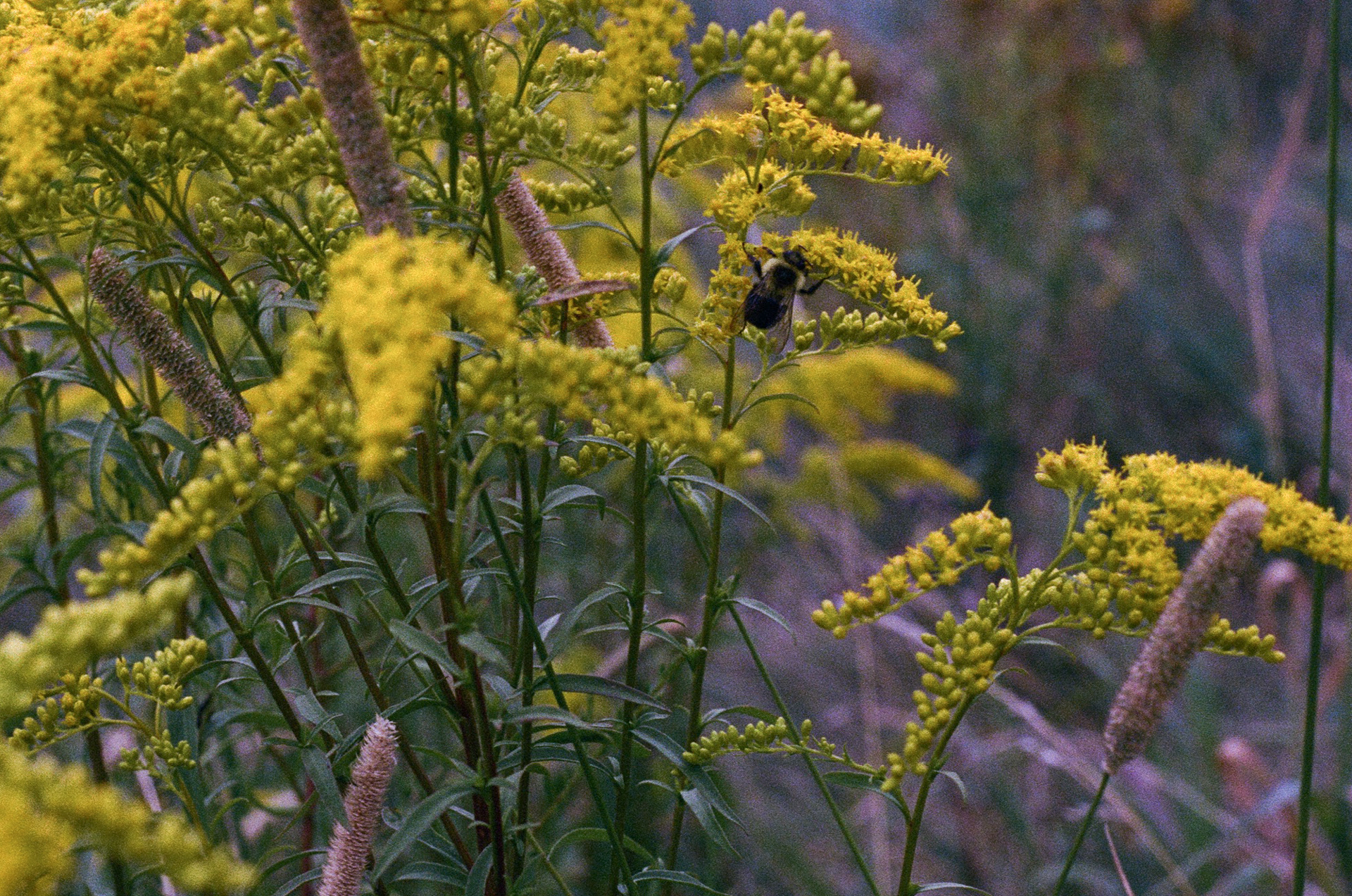
I would estimate, over the past year, close to 90% of the photos I've taken are of Michael. The rest are of the landscape, the light, or other details in the environment that I find arresting or alluring. I have become especially sensitive to small things that might otherwise go overlooked. More often than not it is a voluptuous combination of color and texture that I find fascinating and feel the irresistible urge to photograph. A bumblebee, a mushroom, a pile of rocks against a meadow of ferns can provoke intense wonder, desire, or delight. I suppose all of my photos could be considered, in some way, erotic. In other words: if I love it, I photograph it.

Bumblebees feed on late summer goldenrod near Lake Minnewaska. Summer 2025. Photo by me.
If this past year has taught me a new visual language, it has also taught me how to see and think in new ways. In addition to the many animal and plant stories I've witnessed unfold over four seasons, I've also witnessed my own growth and transformation as a creature who now spends far more time outdoors than online. 
One of the psychological effects of this change is that my perception of time has slowed to what finally feels a more manageable pace. Whereas before I felt like there was never enough time (and what little time I felt I had at any given moment could scarcely be enjoyed), I now feel I am living and working at a rhythm that feels natural and sustainable. No more rushing to catch the train, or stacking my schedule with meetings and workouts and superfluous social events. No more distractions, no more excuses, no more doomscrolling or clickholing or brain rot. No more chasing trends or status or opportunity. No more multitasking. I still have responsibilities, of course—but with the added freedom of doing one thing at a time, on my own time, and doing it well.
If New York City's hyperconnected hustle culture could be compared to running on fumes on an accelerating hamster wheel, then life in The Real World is like going for a swim when the weather is nice because: why not? You have time.
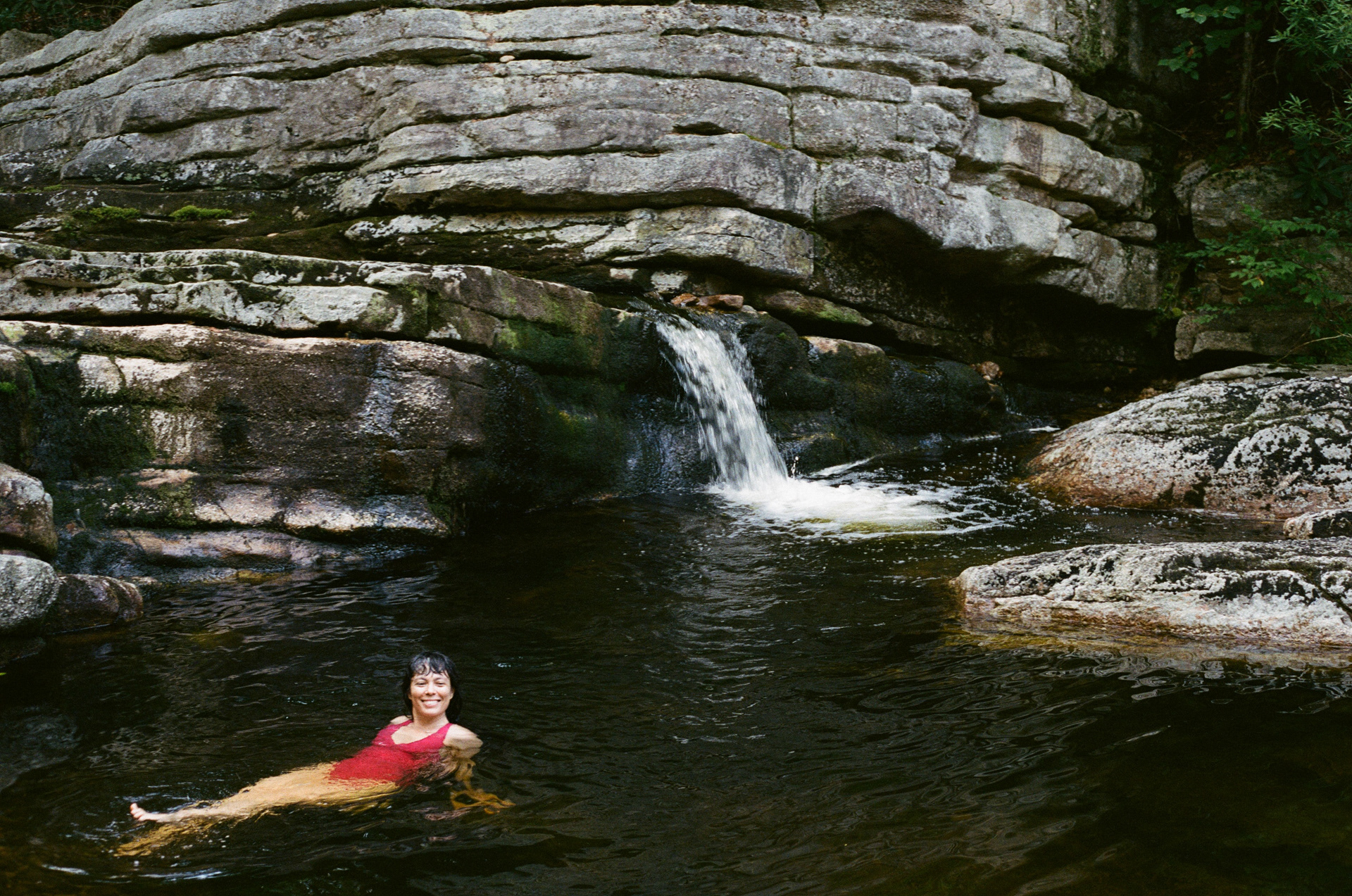
Actually, it's not like going for a swim; it is going for a swim.

Swimming at Peter's Kill Falls. Summer 2025. Photo by Michael Stephen Brown.
The slowness of film photography helps reinforce the slower pace of offline life. The limitations of shooting with a manual SLR, where I have maximum 36 frames in a single roll of film—combined with the cost of shipping, developing, and scanning the film—has forced me to be much more intentional about what I photograph. This isn't to say I've become an inhibited photographer, just more aware. I still feel the same freedom and spontaneity of shooting with a smartphone, but I am now much more careful about how I frame the image, where to focus, and the quality and direction of natural light.

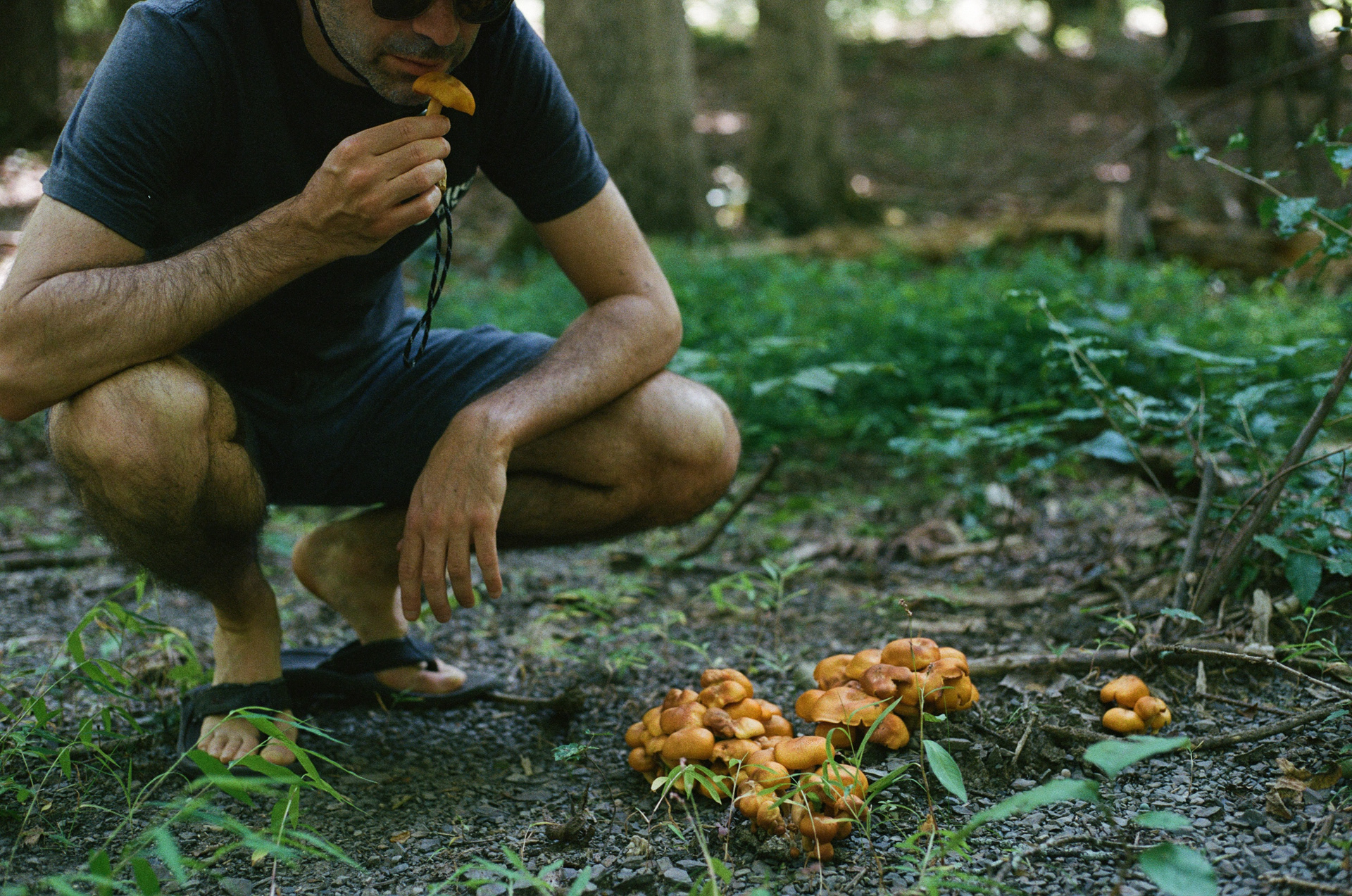
Poisonous jack o'lantern mushrooms. Summer 2025. Photo by me.
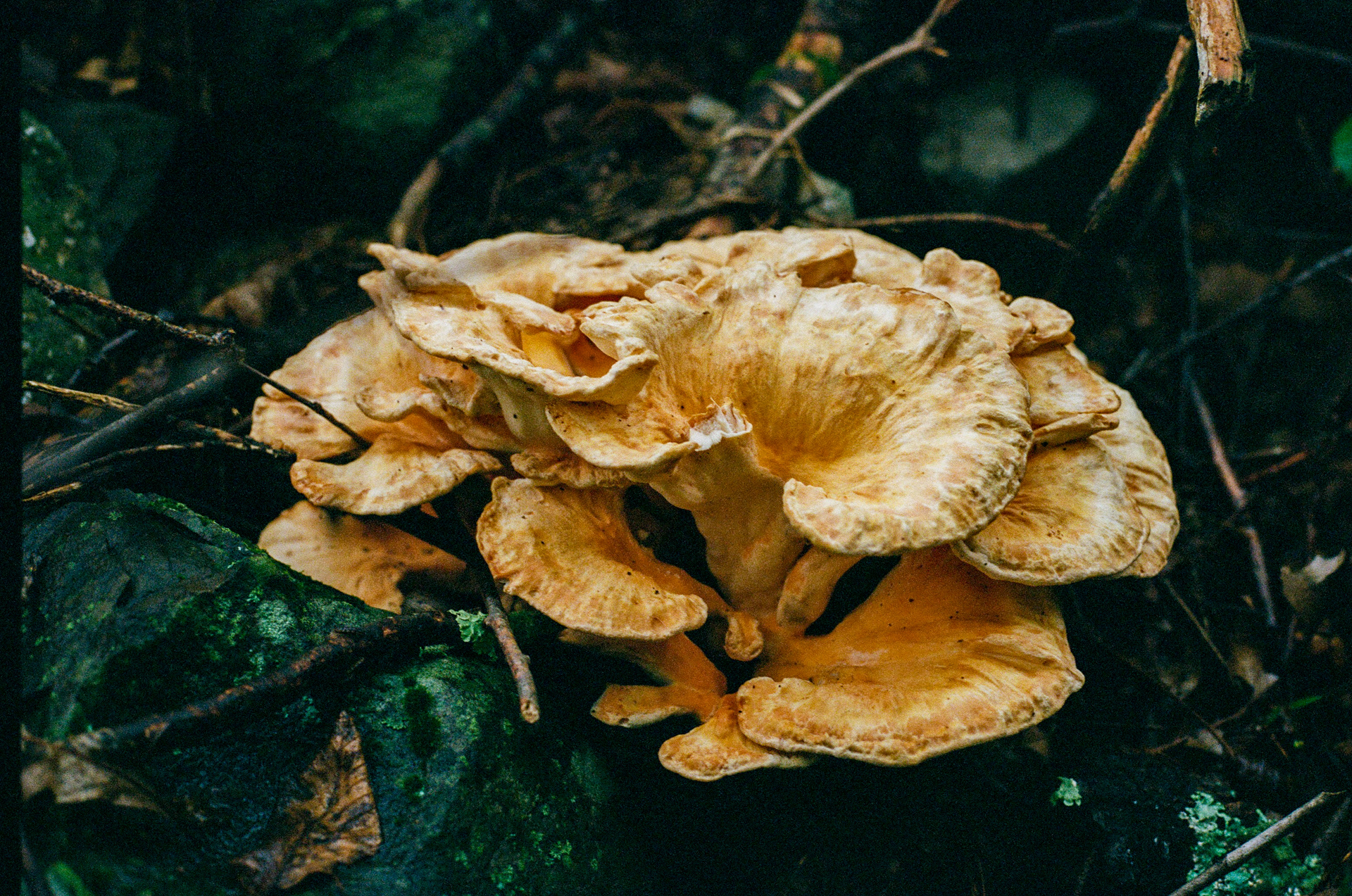
Edible chicken of the woods mushrooms. Summer 2025. Photo by me.
Once I've finished a roll of film, the results are still far from immediate. To save on shipping costs, I tend to wait until I've shot at least four rolls before sending to the lab for processing. Depending on my appetite, it might take anywhere from a few weeks to a few months to see the images. But I've come to enjoy the anticipation that builds as a result of this slowness. The entire process gains a sense of mystery and suspense that is otherwise lost with the immediacy of the smartphone camera. This suspense climaxes in an eagerly awaited "big reveal" that makes the act of photography feel much more special—more like a ritual, and less like a reflex. 
But the process doesn't end there; I download and catalog the digital scans, then select my favorites for printing. The final destination for this first year's worth of photos was an 80-page clothbound archival scrapbook, mounted with acid-free photo corners and carefully labeled with a No. 6 pencil. The book sits open at all times, on a dresser on the landing at the top of the stairs. To be admired at any given moment, without the aid of a screen. Rather than being buried at the bottom a hard drive or posted online and scrolled past (or quickly "liked" and forgotten) never to be seen again, I actually regularly look at these printed photos. I see them, I touch them, I meditate on them. They exist as tactile, physical artifacts in real life.
Critics might call this attitude a romanticization or fetishization of the medium of film. I'm totally fine with that. Shooting with film brings me great pleasure in the same way cooking a meal from scratch does. Sure, there are faster and cheaper ways to feed yourself, and to make photographs. But that's not the point.

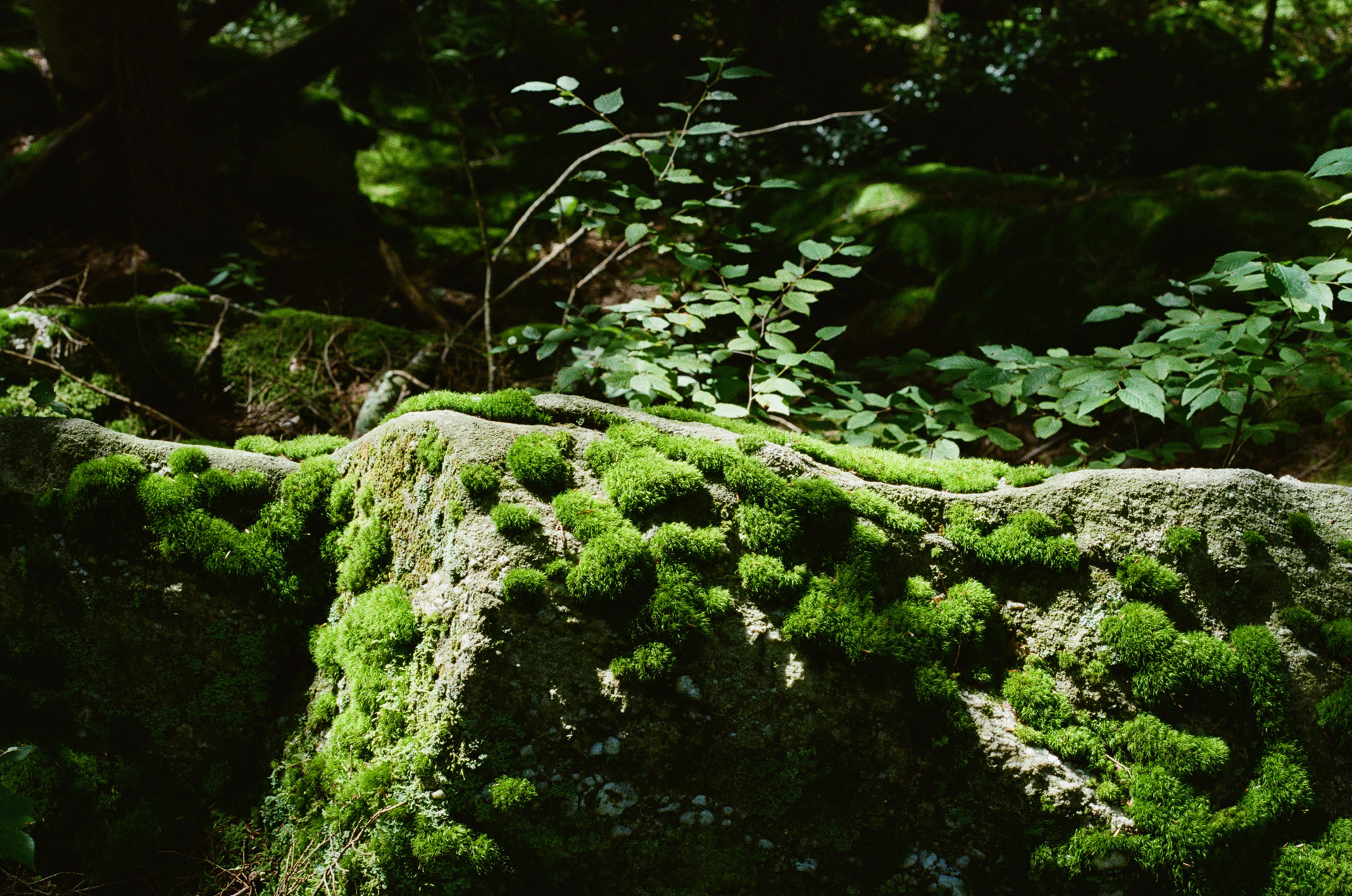
Mossy rocks on the trail to Lake Awosting. August 2025. Photo by me.
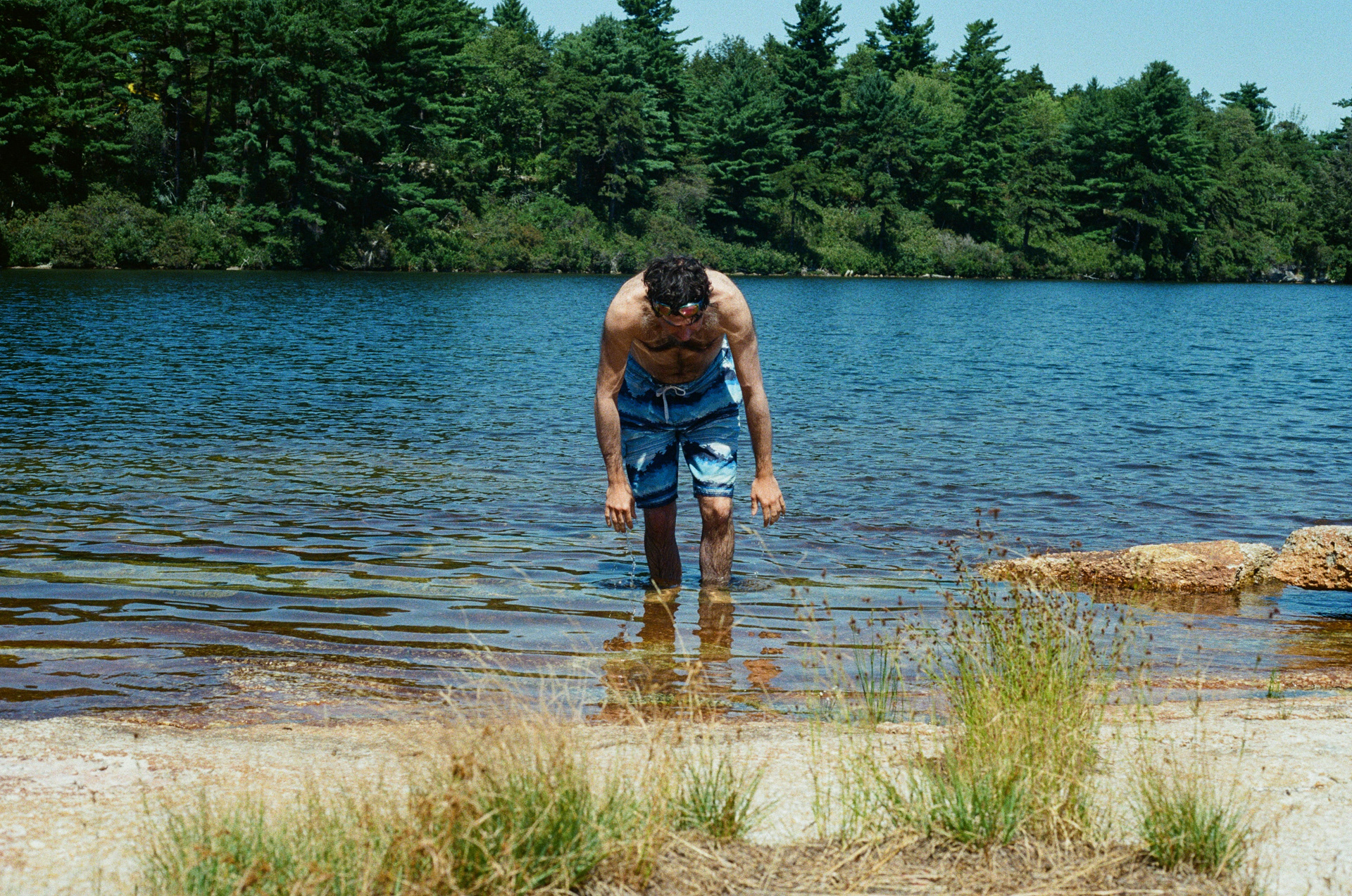
Swimming at Lake Awosting. August 2025. Photo by me.
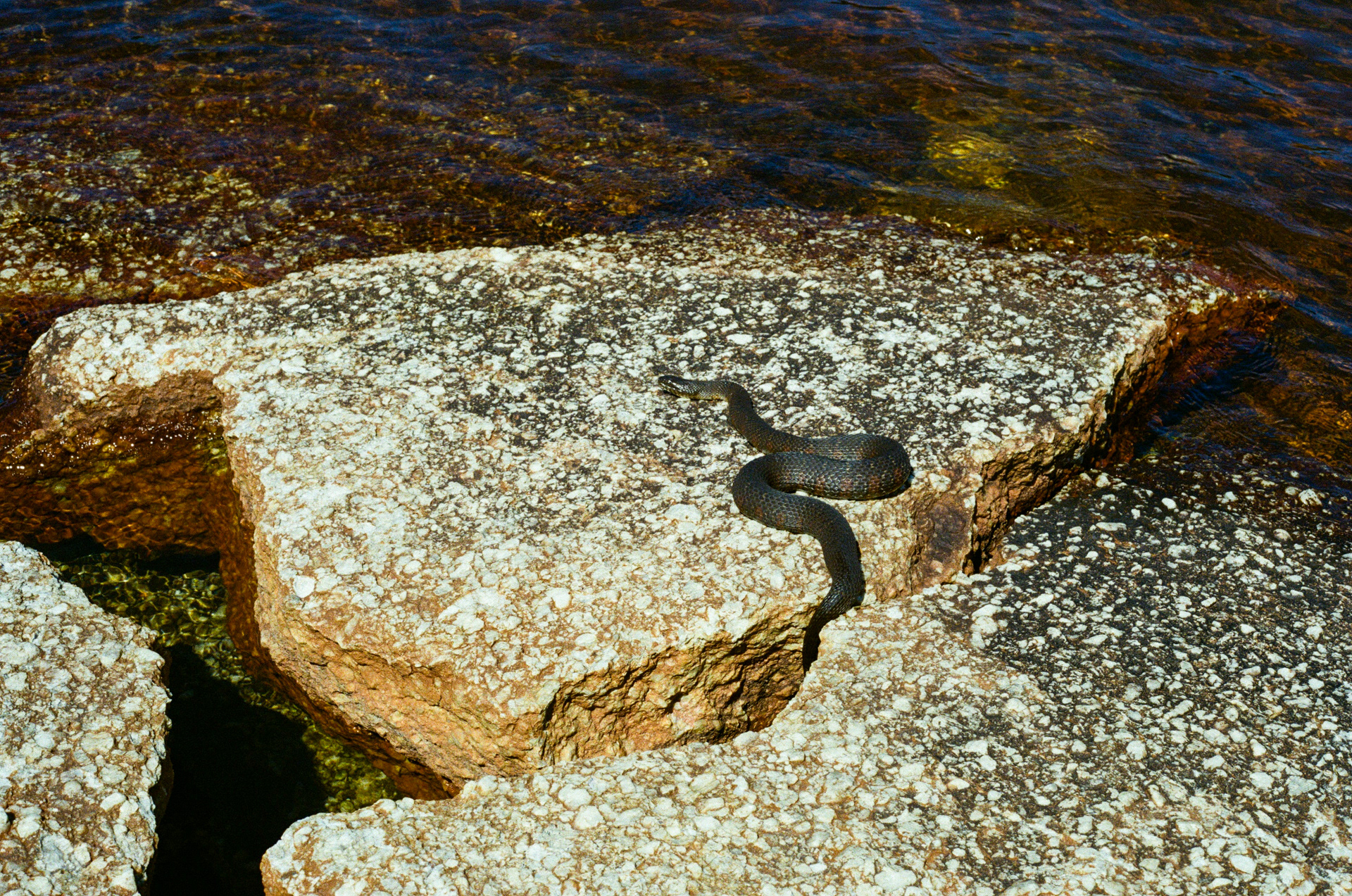
A water snake emerges from Lake Awosting. August 2025. Photo by me.
I wrestled with whether to share these photos publicly online, or to keep them completely private, visible only to friends and family who might visit our house and see with their own eyes the original physical prints. I weighed the benefits and drawbacks of sharing versus keeping them secret. On the one hand, sharing these images invites others into my world, into my life, in a meaningful way.
On the other hand, sharing them destroys their mystique, their authenticity, their unique presence in the world. Their aura as Walter Benjamin would say. I rather liked the idea of treating these images as sacred objects that only a privileged few could behold. It makes them feel special.
But that would mean that some of my closest friends might never see them. Many of those dearest to me are not at all nearest to me. Some of my best and oldest friends live hundreds if not thousands of miles away, in other countries, with families and jobs and obligations that make traveling to my house in the Shawangunk Mountains a bit lower on the list of priorities.
So I decided to write this post.

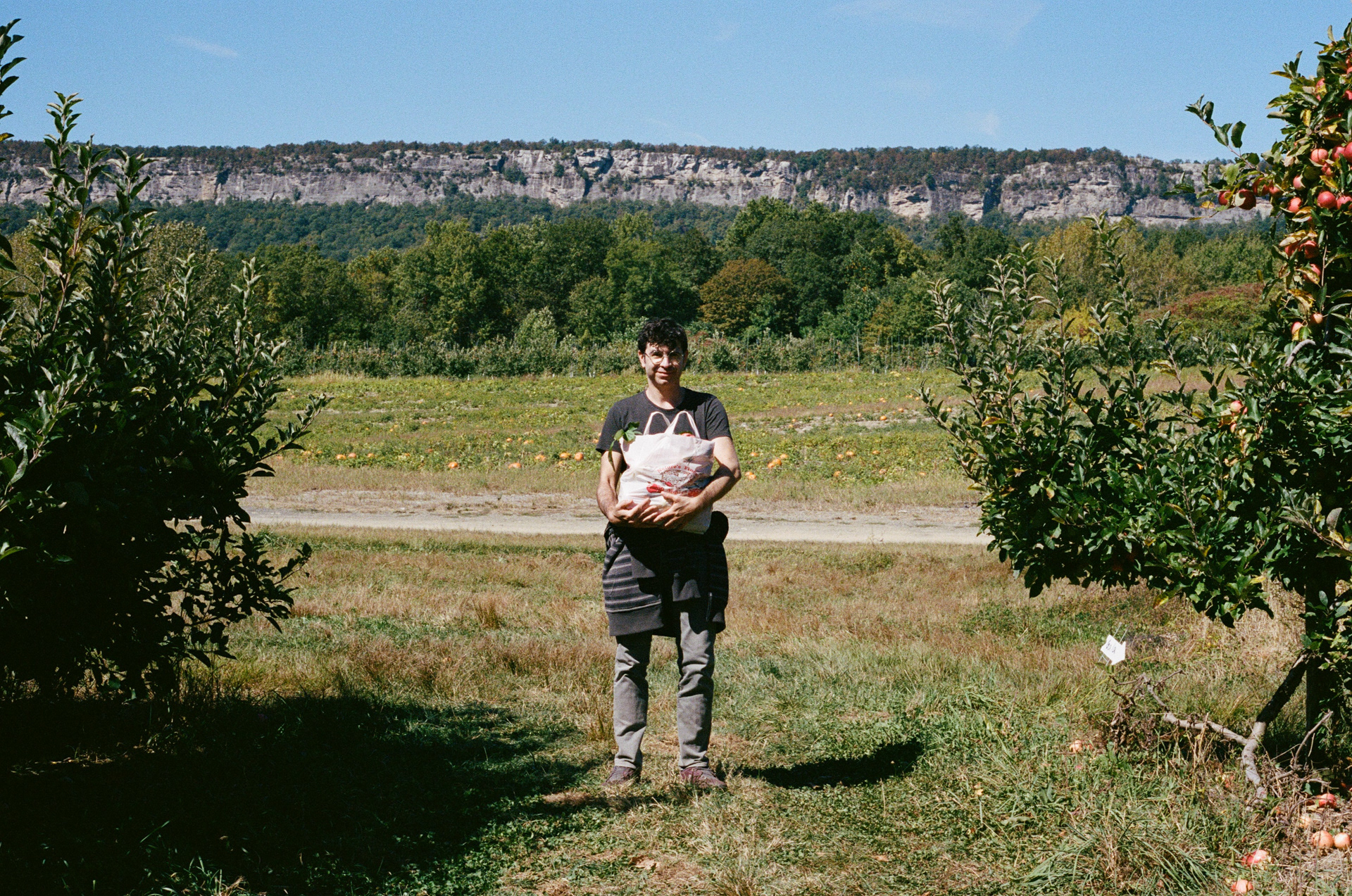
Apple picking at Wright's Farm in Gardiner, NY. September 2025. Photo by me.
As much as I love living here, the reality of The Real World is that nothing is permanent. No matter how solid or timeless or stable it might seem. I don't just mean this in an abstract sense; I mean it literally, as in things still change and evolve or vanish, just as they do in the virtual and urban worlds. It's just at a slower pace. And so my growing awareness of the passage of time—the inevitability of change—motivates me to take better care to preserve and share the things that are important to me. This includes my own images and memories of the things I love.

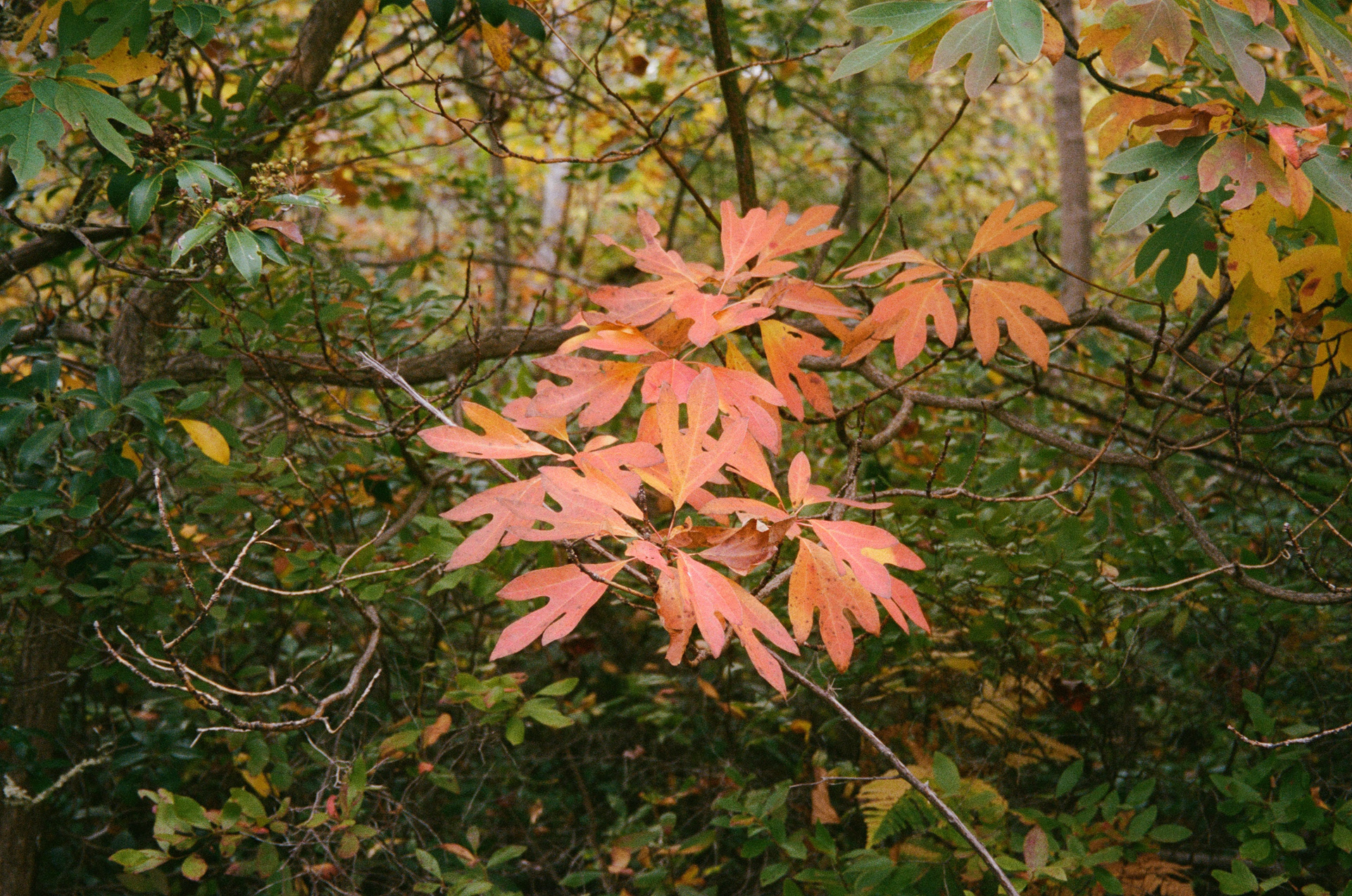
Sassafras leaves in Minnewaska State Park Preserve. Fall 2025. Photo by me.
Michael and I have lived here a little over a year now, but we're going to have to move soon. Our lease is up and our landlords are selling the house. Come this time next year, The Real World will look different. But we'll have evidence of our world as it was in 2025. And we can remind each other what it looked and felt like—and inspire ourselves and maybe those around us to continue to look at the world with the same curiosity and wonder we did when we first moved to the woods.
— January 19, 2026

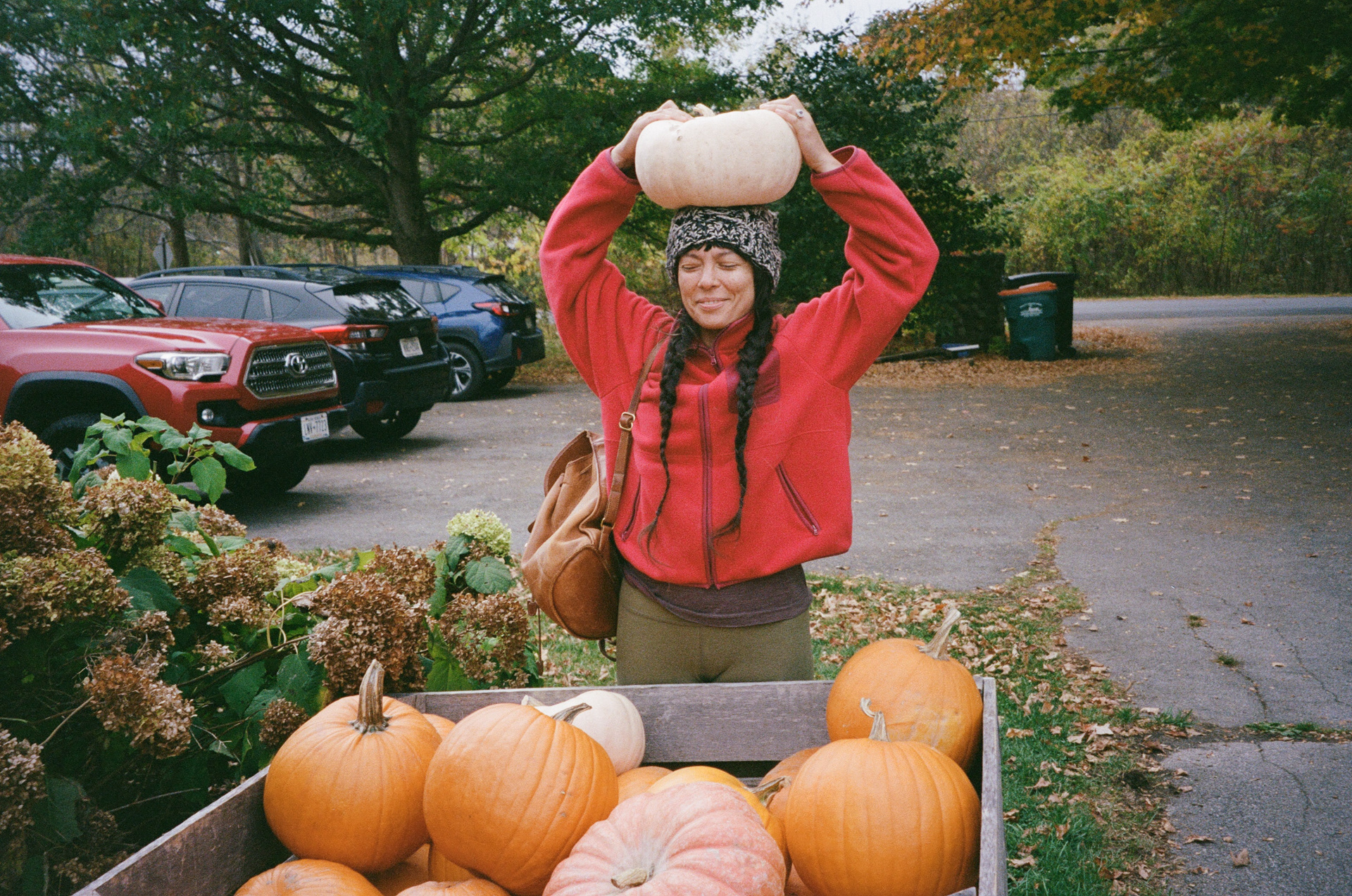
Picking pumpkins at Laughing Fork Farm. Lloyd, NY. Fall 2025. Photo by Michael Stephen Brown.
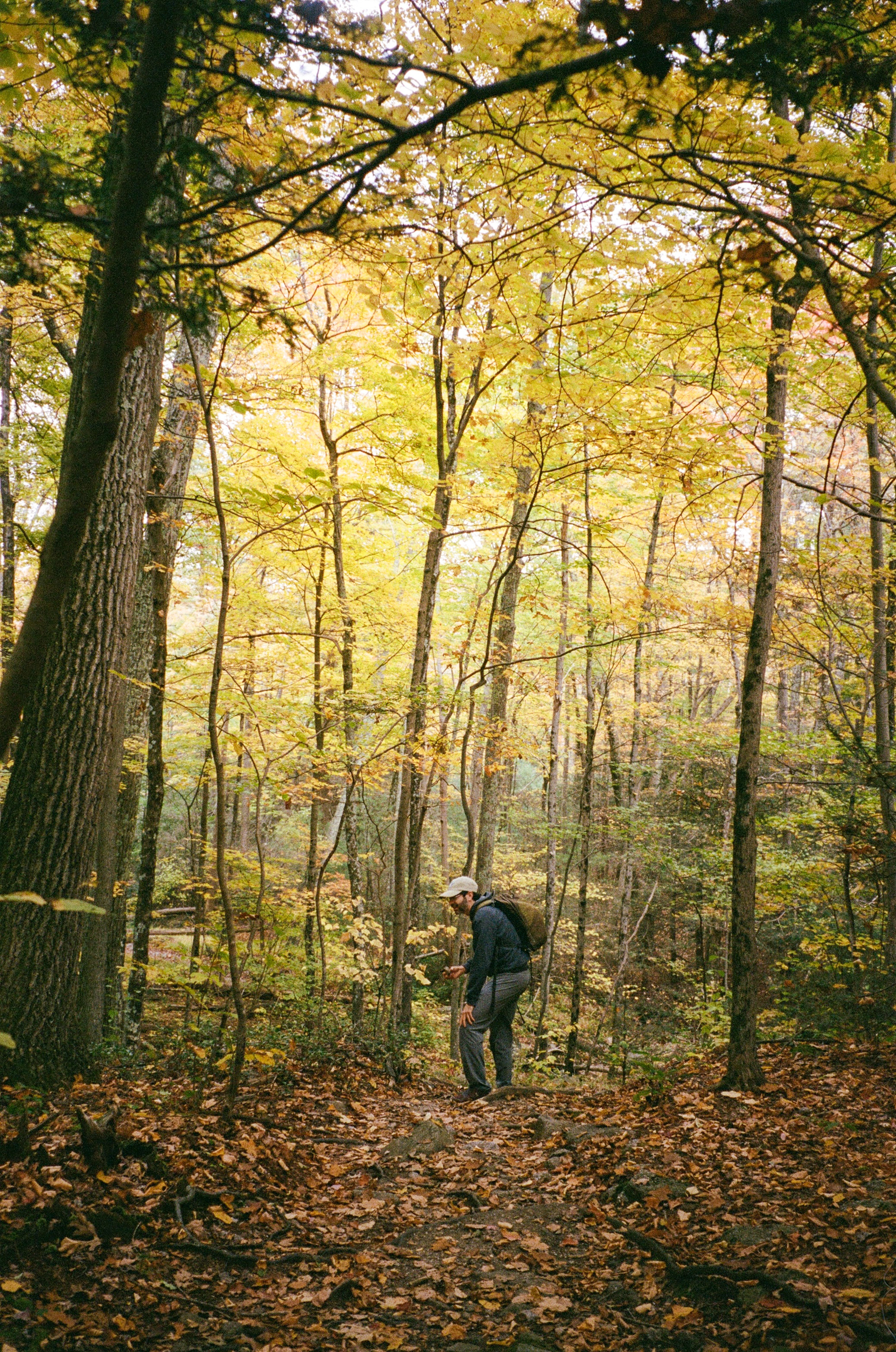
Trail to Gertrude's Nose. Fall 2025. Photo by me.
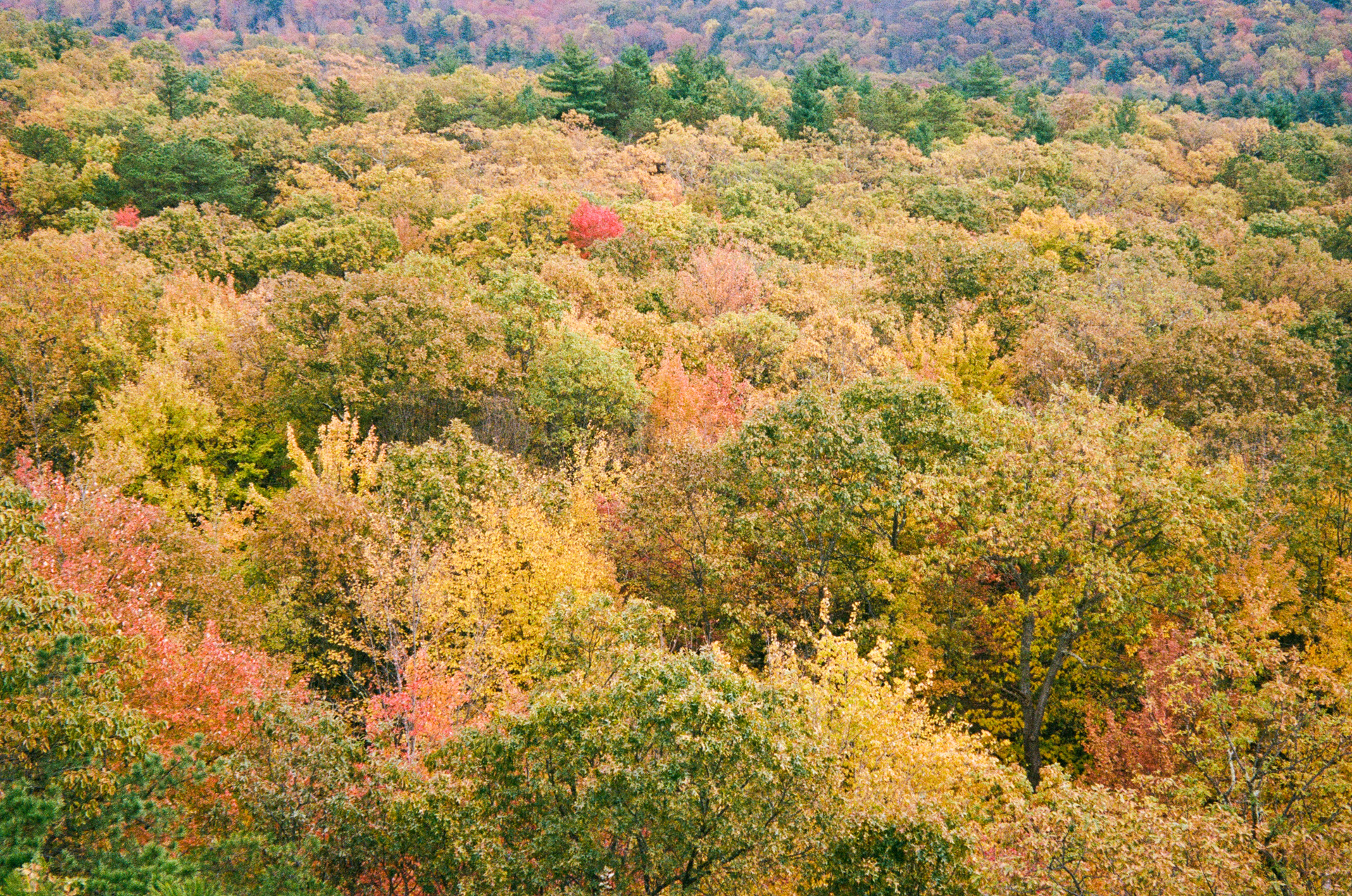
Fall foliage at Minnewaska State Park Preserve. Fall 2025. Photo by me.
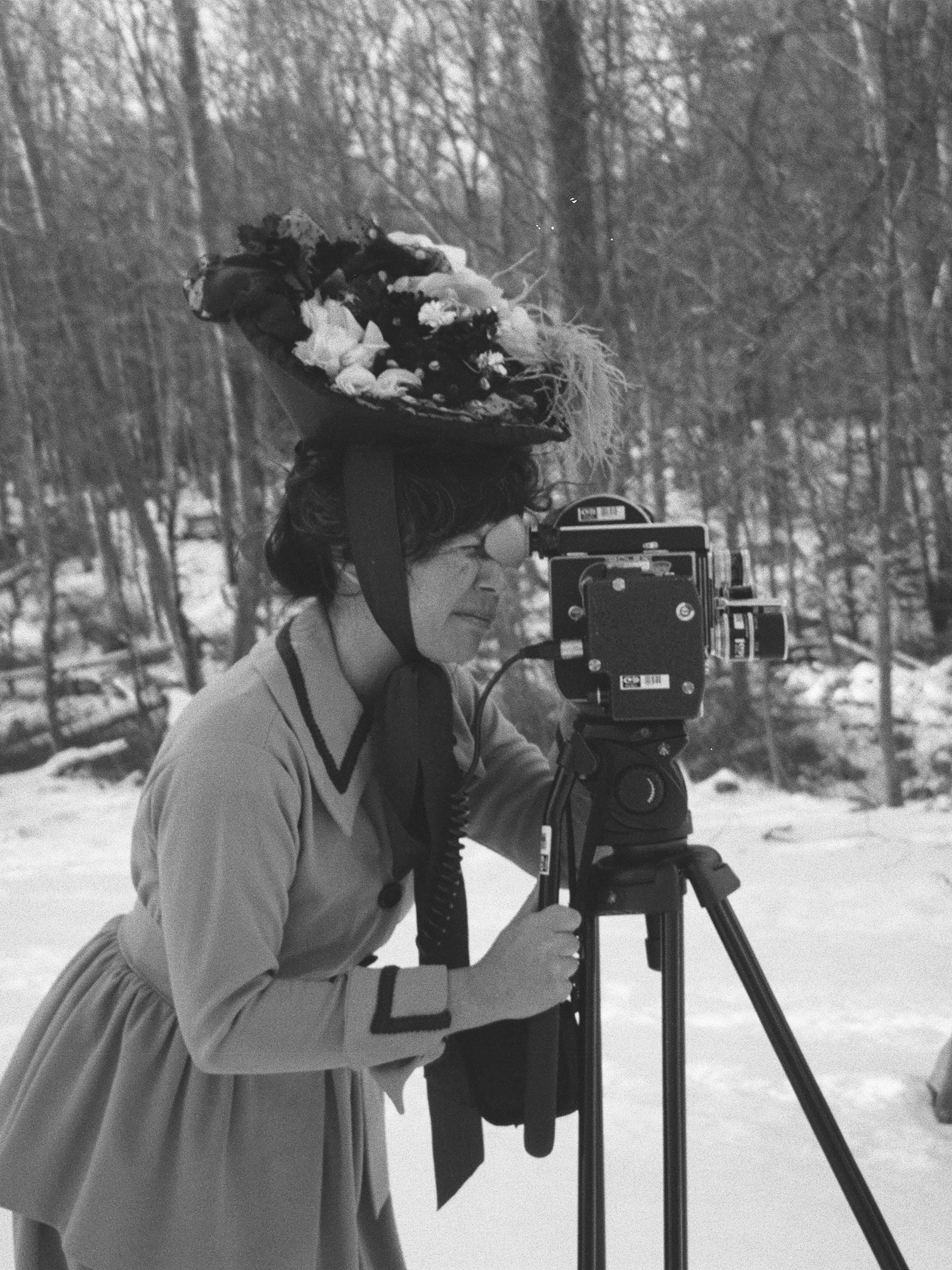
"Photography expands what it is possible to see but it quietly implies all that it cannot. We intuitively understand that some things are beyond the limits of representation and that the photograph is but a hint of the fullness of life. And this, paradoxically, is what drives us to make more photographs."
— Mark Alice Durant, 27 Contexts: An Anecdotal History in Photography

Browse More

Back to Top